
Chestnuts, Marroni & Sagre: Autumn in the Garfagnana
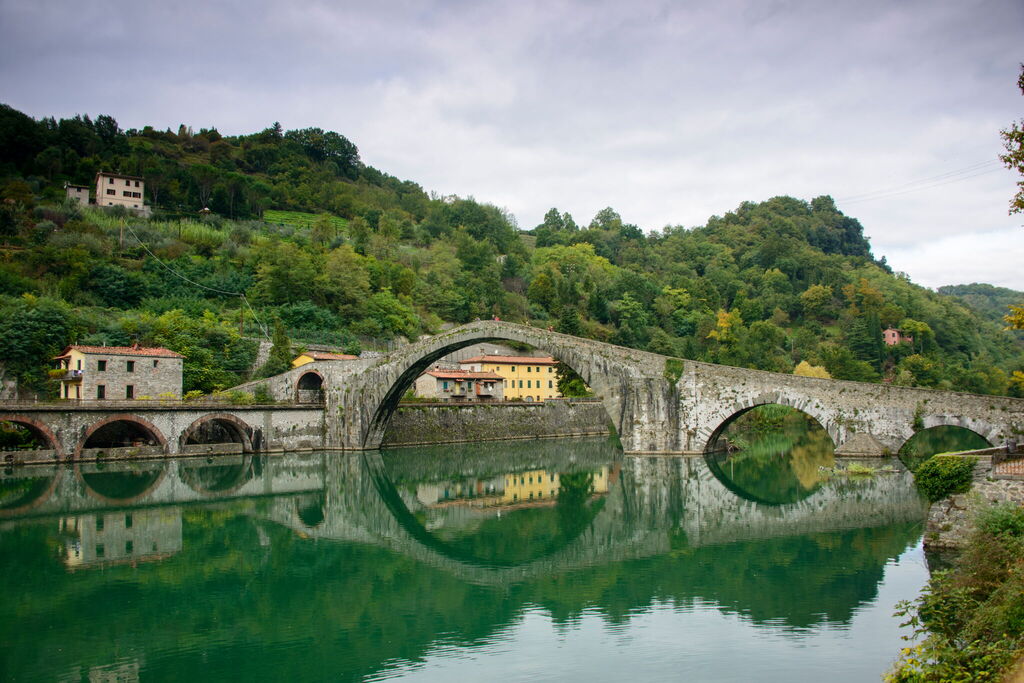
The summer visitors to the Tuscan coast have long since departed. This marks the start of a season in the mountain forests of the Garfagnana that many travellers aren’t even aware of. Between the foothills of the Apuan Alps and the Apennines, the forests are turning a reddish-brown. A smoky, slightly sweet scent hangs in the air. And in almost every village, celebrations take place at the weekends. The season of marroni has begun – the sweet chestnuts, which here are far more than just a forest fruit.
Anyone wishing to experience Tuscany in October and November away from Chianti and the coast will find in the Garfagnana a region that remains largely undiscovered by tourists. It is precisely for this reason that it offers a particularly authentic glimpse of rural Italy. offers a particularly authentic glimpse of rural Italy.
The bread tree
In the Garfagnana, the chestnut is called ‘albero del pane’, the bread tree, and not without reason. For centuries, when wheat was scarce in this mountainous, barren landscape, it ensured the survival of entire village communities. The dried, ground nuts were used to make chestnut flour – the basis for bread, polenta di neccio and countless dishes that still feature on the region’s menus today.
This significance continues to bear fruit to this day: Farina di Neccio della Garfagnana has a Protected Designation of Origin, one of the few in Italy that refers exclusively to chestnut flour. The traditional drying huts, known as ‘metati’, in which the nuts were smoked over an open fire for weeks on end, still characterise the landscape of many mountain villages today and can often be discovered in their original state whilst out walking.
Where the smoke still rises
You almost inevitably come across them whilst out walking: small, mostly abandoned stone huts with a two-storey structure. The lower storey housed the fire, whilst the upper storey held the chestnuts on a perforated wooden rack, where they were permeated by the rising smoke – for weeks on end, at a low temperature. It is precisely this process that gave Garfagnana chestnut flour its characteristic, slightly smoky aroma, which clearly distinguishes it from chestnut flour from other Italian regions.
A few metati are still operated in the traditional way today, mostly by local associations or families who are committed to keeping this craft alive. At some sagre, visitors can watch the entire drying process live, accompanied by older villagers who often still remember the technique from their own childhood.
Sagre: Festivals not made for tourists
From October through to November, the small villages of the Garfagnana are transformed, weekend after weekend, into venues for the Sagra della Castagna. Long tables under the open sky, roasted chestnuts straight from the pan, necci – wafer-thin flatbreads baked in chestnut leaves and filled with fresh ricotta – accompanied by a glass of local wine. These are usually organised by a local association or the parish, not by an events agency.
These festivals are aimed almost exclusively at a local audience. Those who take part experience village life without any pretence. You simply sit down at the table, strike up a conversation and, during it, learn which village grows the finest chestnuts in the valley. This is a question hotly debated here with genuine passion.
Among the best known are the festivals in Colognora, in Sant’Anna di Stazzema in neighbouring Versilia, and in several hamlets around Castelnuovo di Garfagnana, the region’s unofficial capital. The dates vary slightly from year to year and are usually only announced by the local councils a few weeks beforehand – even more reason to travel on a whim.
Chestnut flour in the kitchen
Alongside necci, castagnaccio is one of the best-known specialities: a flat, dense cake made from chestnut flour, water, a little oil, raisins and pine nuts. With its slightly bitter crust and moist texture, you either love it or leave it; there seems to be little middle ground.
Chestnuts are also used in savoury dishes: gnocchi, soups with wild boar ragout, and a local variation on polenta where chestnut flour replaces the maize flour. Many trattorias only offer these dishes during the season and revert to their regular menu afterwards – if you want them, you should ask specifically for them.
Hiking in the Parco delle Alpi Apuane
The Garfagnana borders directly on the Parco Regionale delle Alpi Apuane. Despite modest peak heights of barely more than 1,900 metres, an astonishingly alpine landscape unfolds here: rugged marble cliffs, deep gorges, and vegetation that differs markedly from the milder Mediterranean landscape further south. Marked trails link chestnut forests at lower altitudes with alpine ridge paths higher up, so that within a few hours’ walk, contrasting landscapes alternate.
In autumn, when the foliage changes colour and the first cold snaps cover the highest peaks with a thin layer of snow, a contrasting scene emerges that can only be seen for a few weeks each year. Those who set off early are often rewarded with clear views all the way to the sea – the mountains and the coast lie unusually close together here.
A valley that has remained true to itself
What sets the Garfagnana apart from many other rural regions is the tenacity with which old traditions are upheld here. Whilst in areas more heavily developed for tourism, customs are increasingly becoming staged attractions, the Sagre della Castagna remain, first and foremost, what they have always been: celebrations of the village community itself. Visitors are welcome, but they are guests in a ritual that was not invented for them.
Anyone who has ever sat in a packed village hall on a rainy November afternoon, surrounded by the scent of roasted chestnuts and a dialect that is barely understood even in the rest of Tuscany, knows this: this part of the region has held out so tenaciously against the uniformity of modern mass tourism, so tenaciously against the uniformity of modern mass tourism.
A holiday home in the mountains rather than by the sea
The Garfagnana differs markedly in terms of landscape from the better-known regions of Tuscany. Instead of rolling hills and avenues of cypress trees, travellers can expect rougher mountains, dense forests and a noticeably cooler, more autumnal climate. Stone houses in small mountain villages, often with open fireplaces and views of the Apuan Alps, offer an almost Nordic cosiness at this time of year, combined with Italian hospitality.
Many of these houses have been carefully restored over generations, with thick walls that keep the interior cool in summer and retain the warmth of the fireplace particularly well in autumn. This character differs noticeably from the more open, light-filled country houses of the classic Chianti region of Tuscany.
Practical information
The region is considerably more rural and sparsely populated than the better-known areas of Tuscany. Supermarkets and more extensive shopping facilities are concentrated in a few central towns such as Castelnuovo di Garfagnana or Barga. A car is practically indispensable here, as public transport between the mountain villages is very limited.
Temperatures drop noticeably in October and November, particularly in the evenings – a holiday home with a working fireplace or reliable heating is far more worthwhile here than during the warmer months. The sagre usually take place only at weekends, with limited capacity – if you wish to attend, it’s best to plan early, but allow for some flexibility regarding the exact dates.
The best time to visit is between the second half of October and mid-November, when the changing colours of the leaves, the chestnut harvest and most of the sagre coincide. Those who prefer a quieter atmosphere will also find, in late November – once most of the festivals are over – a region that has settled into tranquillity. Misty mornings, smoking fireplaces and a sense of peace provide a soothing contrast to the tourist hustle and bustle of the summer months.
Frequently asked questions about chestnuts and autumn festivals in the Garfagnana
When do the chestnut festivals take place?
Mainly at weekends between October and November; the exact dates are set anew each year by each municipality.
What is Farina di Neccio della Garfagnana?
A protected, traditional chestnut flour with a Protected Designation of Origin (PDO), which has been the basis for bread, polenta and necci for centuries.
Can you collect chestnuts yourself?
In many places, yes, especially during the official harvest season. Ask locally about accessible areas or organised collecting trips.
How does the Garfagnana differ from the classic image of Chianti?
It is more mountainous, more forested and significantly less touristy. Instead of vineyards and cypress trees, chestnut woods and the alpine landscape of the Apuan Alps dominate.
Can a visit to the Garfagnana be combined with a stay on the coast?
Yes, the Versilia coast, as well as Carrara and Pietrasanta, are just a short drive away.
The Garfagnana reveals a side of Tuscany that many travellers have yet to discover – rougher, more unspoilt, and deeply rooted in rural tradition. ItalicaRentals will help you find the perfect holiday home for an autumn retreat in the mountains.