
- Renting A Holiday Home In Italy: What You Need To Know Before Booking – And What Most Booking Sites Don’t Tell You
- When Should You Book A Holiday Home In Italy?
Italy with children: Which region suits which age group?
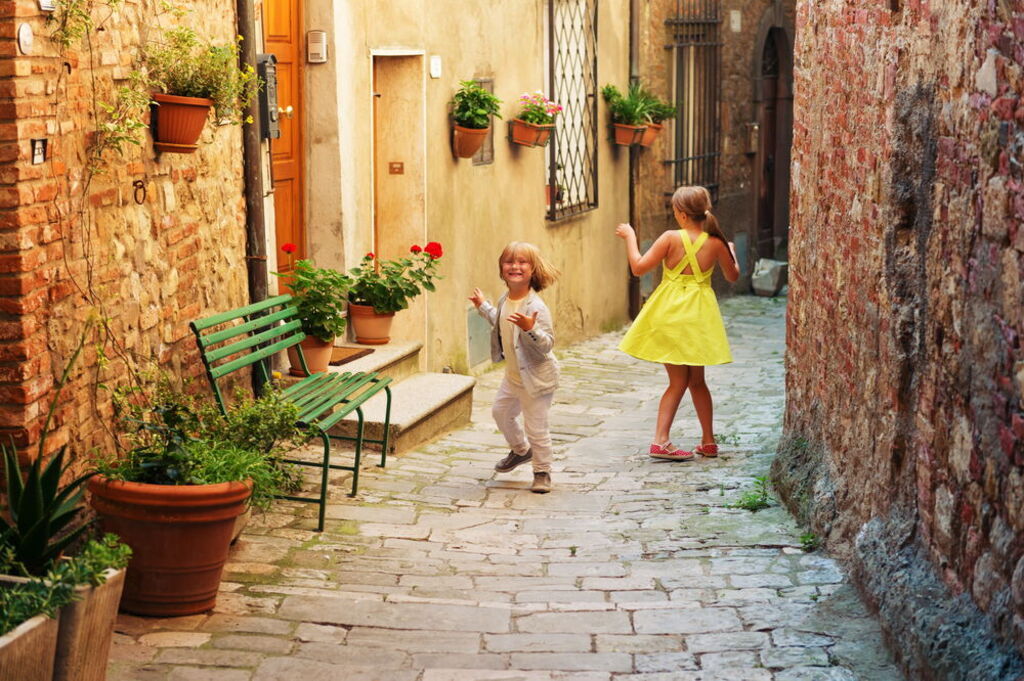
A friend’s two-year-old son loved just one thing about Lake Garda last summer. It was the shallow pebble beach near Sirmione, where he could spend hours throwing stones into the water without anyone having to stand by nervously. Her twelve-year-old nephew would probably have been bored to death on that very same beach. He wanted water slides, rollercoasters – anything with a bit of a thrill. And her sixteen-year-old niece didn’t want a beach at all, but rather Florence, ice cream in the old town and a bit of that ‘travelling like a grown-up’ feeling.
That’s exactly the crux of the matter: travelling to Italy with children isn’t a one-size-fits-all affair. Such places can be found, for example, in Riva del Garda or at Spiaggia Sabbioni near Sirmione, with safe, spacious beach areas and short distances between accommodation, the beach and the ice-cream parlour. However, they depend almost entirely on the children’s ages. A destination that’s ideal for toddlers can be a complete nightmare for teenagers, and vice versa. If you know this in advance, you’ll avoid disappointed faces at your holiday destination and can plan a region that suits your own children. Below, we’ll go through this systematically, from the nappy bag to the first independent stroll through town. We’ll also include a few practical thoughts on getting there, accommodation and the best time to travel – aspects that are often overlooked in most guidebooks.
0 to 5 years: Safety and short distances matter more than adventure
With a toddler in tow, the definition of a perfect holiday change radically. Suddenly, it’s no longer the most spectacular view that counts, but how far it is from your beach towel to the nearest patch of shade, and whether the water really stays as shallow as it looks from a distance.
The northern Adriatic, with resorts such as Bibione, Lido di Jesolo and Caorle, is tailor-made for this very stage of life. The beaches slope gently for kilometres, playgrounds and small water parks are often right next to the beach, and the hotels and holiday resorts have been catering to young families for decades. Those who prefer mountains in the background will find similarly child-friendly conditions on Lake Garda, for example in Riva del Garda or at Spiaggia Sabbioni near Sirmione, with safe, spacious shoreline areas and short distances between accommodation, the beach and the ice-cream parlour.
A third, quieter option is South Tyrol, particularly around Lake Kaltern. Instead of the sea, there is a pleasantly warm lake for swimming, plus pram-friendly walking trails for anyone who wants to experience a bit of nature even whilst pushing a pushchair. What all three regions have in common is a high level of safety, calm waters and short distances – the most important factors of all when a midday nap dictates the day’s schedule.
A holiday home rather than a hotel
When it comes to accommodation at this stage, a holiday home is particularly worthwhile rather than a hotel, quite simply because your own mealtimes and bedtimes with a toddler rarely fit in with fixed buffet times. Having your own kitchen for baby food or their first solid meals, and a room where the child can go to sleep as early as seven in the evening whilst the parents stay up next door – this often makes a bigger difference for this age group than the attraction itself.
The journey itself also deserves special attention at this stage. A flight lasting several hours with a toddler is rarely a relaxing experience, which is why many families at this stage of life choose to travel by car and prefer regions that can be reached in one, or at most one and a half, days – such as the northern Adriatic or Lake Garda from southern Germany or Austria. Those who do fly, however, would be well advised to allow for a buffer day afterwards to help the very little one’s cope with jet lag, however minimal it may be on short flights.
Better to travel in June or September
The time of year for the trip also warrants a second thought. The peak season in July and August does bring warm water, but in smaller towns in particular, kitchens close completely between main meals. With hungry children, this can quickly become a problem at four o’clock in the afternoon, as can the midday heat, which is hard to bear with a toddler. June or September, when temperatures are milder and the beaches are less crowded, are often much more relaxed for this age group. This applies to both the children and their parents, who can then enjoy a quiet coffee. Whilst primary school children are usually tied to the summer holidays, teenagers, on the other hand, offer maximum flexibility for the quieter off-peak seasons, whilst the child sleeps in the shade.
6 to 12 years: The beach is fantastic, but there needs to be some action too
Once children reach primary school age, a day at the beach is often no longer enough – at least not as the only activity. Now comes the desire for real adventure, even if it’s still the child-friendly, safe version of it.
Lake Garda remains a classic choice for this age group too, though for different reasons than before. Gardaland, Movieland and several water parks are practically on your doorstep, along with boat trips across the lake and the cable car up Monte Baldo – an excursion that impresses even adults. Those who’d rather head to the seaside without sacrificing variety will find just the right mix on the Tuscan coast or on the island of Elba: sandy beaches combined with trips to small nature reserves, medieval towns to explore and walks that are easily manageable even for children.
Great adventures in nature and on the water
Sardinia is a hit with this age group thanks to its gently sloping beaches, such as those at Costa Rei, San Teodoro or around Cagliari. These beaches are complemented by first attempts at snorkelling, boat trips and simple nature experiences, which children of this age usually take in with wide-eyed wonder. The common thread for this age group: ‘light adventure’ – that is, waterfalls, small climbing parks, boat trips and theme parks, always with a safe beach nearby as a place to retreat to.
At this age, accommodation needs also begin to change. Children often want a little more freedom of their own – their own room, perhaps a neighbouring house with holidaymakers of the same age to play with in the evenings. A holiday home with a garden or a small pool offers exactly the space that a hotel room can hardly provide, whilst still maintaining proximity to theme parks or beaches.
Greater comfort when travelling by plane
When it comes to getting there, flying is now a more viable option again, as primary school children usually cope well with waiting times and shorter flight distances, especially if they have a tablet or an engrossing book to keep them occupied on board. This also opens slightly more distant destinations such as Sardinia, which would involve a significant detour via the ferry if travelling by car.
As for the travel period, the summer holidays themselves are almost impossible to avoid; school-age children leave little room for manoeuvre. That said, it’s worth considering the last few weeks of August during the holidays, when many families have already returned home and beaches and theme parks become noticeably less crowded.
Aged 13 and over: now it’s time for real variety
With teenagers, the situation changes completely once again. A purely beach-based holiday loses its appeal, whilst interest grows in real cities, in history, and in the feeling of experiencing something rather than just lying by the pool.
City breaks to Rome, Florence, Pisa or Bologna work surprisingly well at this age. Especially if you combine sightseeing with street food, short workshops in museums and enough of the city’s buzz to ensure it doesn’t feel like a purely educational programme. Those who prefer to keep on the move can combine a round trip through northern Italy: South Tyrol with the Dolomites for a dose of the great outdoors, interspersed with cities such as Siena or Bologna for culture, and to round things off, a few days on the beach on the Adriatic or in Liguria.
Boredom is out of the question
Sicily is one of the most exciting options for this age group because there’s so much to do all at once: beaches, Mount Etna – an active volcano to marvel at – historical sites dating back millennia, and nature reserves for anyone who fancies a spot of the great outdoors in between. Many travel guides recommend road trips or multi-stop itineraries for teenagers anyway, as this allows for a mix of beach days, cultural activities, hikes and city visits, without any single element lasting too long and causing boredom to set in.
When it comes to accommodation, the focus shifts once again at this stage. A centrally located holiday home or flat within walking distance of the old town takes priority over a garden with play equipment. After all, teenagers often want to pop out on their own – to get an ice cream or simply to test their independence a little. On a round trip, it’s also worth involving the teenagers themselves in the planning. Experience shows that allowing them to choose one activity on the itinerary leads to noticeably fewer arguments whilst travelling than a schedule planned entirely by the parents.
When it comes to travel dates, teenagers are the most flexible of all three age groups. As many families with older children are no longer strictly tied to the full summer holidays, trips during the Easter or autumn half-terms can also be easily arranged – often with the pleasant side effect of noticeably lower prices and less crowded attractions in Rome or Florence.
Regions by age briefly
|
Age group |
Recommended regions |
Focus |
|
0–5 years |
Upper Adriatic, Lake Garda, South Tyrol/Lake Kaltern |
Safety, flat beaches, short distances Safety, flat beaches, short distances |
|
6–12 years |
Lake Garda, Tuscan coast/Elba, Sardinia |
Beaches plus theme parks and nature experiences |
|
13+ years |
Rome, Florence, Sicily, |
Northern Italy tour Culture, outdoor activities, variety, city atmosphere |
What else matters: an overview of travel, accommodation and timing
Beyond simply choosing a region, it’s worth considering three practical factors that evolve as children get older.
When it comes to getting there, the general rule is: the younger the children, the shorter the journey should be, which is why travelling by car is often the best option for very young children, whilst flights become much less stressful from primary school age onwards and are practically no longer an obstacle by the time they reach their teens.
When it comes to accommodation, needs shift from simply safety and short distances for toddlers, to a garden, a swimming pool and some open space for primary school children, and on to a central location and independence for teenagers. And when it comes to timing, it pays to travel with young children outside the peak season, whilst primary school children are usually tied to the summer holidays and teenagers, in turn, offer maximum flexibility for the quieter off-peak seasons.
What parents often underestimate when planning
Aside from simply choosing a region, there are a few minor details that are often overlooked in many guidebooks but repeatedly prove to be crucial in practice. The midday heat in high summer, for example, is regularly underestimated, particularly when travelling with young children: between 1 pm and 4 pm, even the shade is barely bearable in large parts of Italy. This leads many experienced families who visit Italy to completely reverse their daily routine: head to the beach early, take a long lunch break in the cool accommodation, and only go out again in the late afternoon.
Meals whilst out and about are also often forgotten. Restaurants in tourist regions are usually child friendly. But in smaller towns in particular, kitchens close completely between main meals. With hungry children at four o’clock in the afternoon, this quickly becomes a problem. In smaller towns in particular, kitchens close completely between main meals – a situation that quickly becomes a problem with hungry children at four o’clock in the afternoon. Keeping a small supply of snacks in the car or in your rucksack saves a lot of unnecessary stress here. And finally, particularly with primary school children and teenagers, it’s worth checking the actual distance between your planned stops. What looks like a short detour on the map can easily turn into a two-hour drive on winding Italian country roads, with correspondingly annoyed passengers in the back seat.
Frequently Asked Questions
Which region is best suited for a first holiday in Italy with a baby?
The northern Adriatic coast, such as Bibione or Lido di Jesolo, is considered particularly straightforward thanks to its gently sloping beaches and the short distances between accommodation and the beach.
Is Lake Garda still interesting for older children?
Yes, thanks to theme parks such as Gardaland and Movieland, as well as boat trips and the cable car up Monte Baldo, the lake remains attractive for primary school children and, in some cases, even teenagers.
Which region is best suited to teenagers interested in history?
Rome, Florence and Sicily offer the richest blend of history and culture, whilst also providing enough variety to keep teenagers entertained.
Is a round trip with children worth it, rather than staying in one place?
For teenagers, often yes, as it allows for a mix of beach, culture and outdoor activities. For young children, however, a fixed base with short distances is usually more relaxing.
When travelling with young children, is it better to travel by car or by plane?
In most cases, travelling by car is more relaxed, provided the journey time does not exceed one to one and a half days. For more distant destinations such as Sardinia, however, a short flight may still be the less stressful option.
Which time of year is best for a holiday in Italy with young children?
June and September are considered particularly pleasant, as temperatures are milder than in the height of summer and beaches and tourist attractions are significantly less crowded than during the holiday months of July and August.
Ultimately, when it comes to a family holiday in Italy, it’s not so much about choosing the most beautiful region per se, but rather the region that suits the children’s current age. If you bear this in mind, you’ll return home with far fewer arguments on the beach and more genuine holiday memories.