
- Sea Kayaking Along The Tuscan Coast: Explore Caves, Coves And Islands From The Water
- Discover Calabria: Italy’s Wild South, Far From The Crowds
Holidays in Italy with dog: The 5 most dog-friendly regions
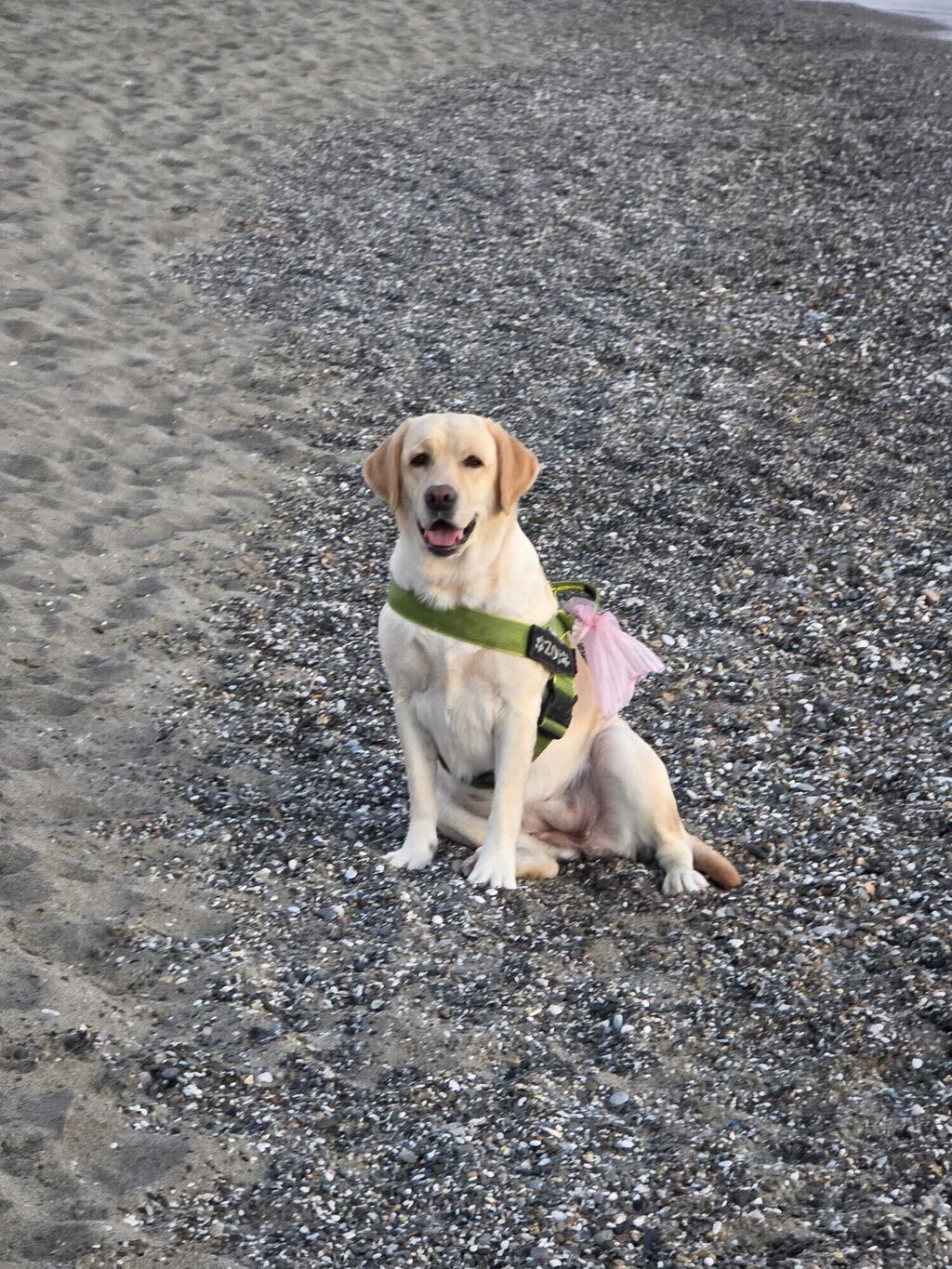
Some people book the same holiday every year – because it works, because it was lovely, because they know what to expect. And then there are dog owners. They plan their holidays like a game of chess: Are dogs allowed? Is there a fenced-in garden? How close is the nearest dog-walking area? And please – no white carpets.
Good news: Italy is one of the most dog-friendly holiday destinations in Europe. Here, dogs are as much a part of everyday life as morning espresso. In small bars, village shops, on piazzas – dogs are welcome almost everywhere. And with the right holiday home, your holiday won’t be lovely despite your dog, but because of him.
Why Italy is ideal for a holiday with your dog
In Germany, dogs are often banned from restaurants, merely tolerated, or have to be kept on a lead. In Italy, they often simply sit under the table, are given a bowl of water by the waiter, and don’t bother anyone. This isn’t just a figment of the imagination – it’s a different mindset. Dogs are part of the family, and anyone travelling with a dog is rarely looked at askance in Italy. This openness makes holidays more relaxed than in many other countries. No constant asking whether the dog is allowed to stay. No guilty conscience when visiting a restaurant. Anyone who has been to Italy with a dog understands why so many dog owners keep going back there time and again.
Why a holiday home is the best choice
Hotels – even dog-friendly ones – often impose restrictions: dogs only in certain rooms, not in the restaurant, not in the pool area, and sometimes only specific breeds or sizes. A holiday home in Italy with a dog, on the other hand, offers true freedom: your own house, your own garden, your own rules (within the terms of the tenancy agreement). The dog sleeps where it always sleeps. In the morning, there’s no lift button to make it nervous, just a patio door leading straight out into the garden. Then there’s the financial aspect: pet charges in hotels can quickly add up. A holiday home that’s explicitly ‘pet-friendly’ is often cheaper – and more flexible.
Entry checklist: Taking your dog to Italy
Before you set off, you need to make the right preparations. The good news for EU travellers: the paperwork is manageable. Key details EU pet passport Official blue passport – compulsory Microchip implantation compulsory for all EU dogs Rabies vaccination Valid, at least 21 days before travel Leash & muzzle compulsory on public transport Leishmaniasis vaccination recommended for southern Italy (sand flies)
Important: Have all vaccination records checked by a vet in advance. Leashes are often compulsory in national parks – this also applies to national parks planned as hiking destinations.
The 5 most dog-friendly regions in Italy
Tuscany tops the list for good reason. Country houses with large plots, fenced gardens and olive groves to stroll through in the morning – this is the Tuscan holiday home for dog owners. The Maremma in the south offers vast nature reserves. The Pineta on the Versilia coast is perfect for long walks. The roads between Siena and Florence, known as the Chianti region, are so wide open that dogs could run here for hours – through vineyards, cypress-lined avenues and along gravel tracks where hardly any cars pass.
Tip for dog-friendly beaches: There are designated dog-friendly beaches near Viareggio – completely deserted in May, and quiet again in September. The Maremma coast offers many less-frequented stretches, especially outside the peak season. Renting a holiday home often means spacious grounds, a fenced-off pool, an olive grove as a run-around area, and a peace and quiet you simply won’t find elsewhere during the peak season.
Apulia – olive groves and a laid-back lifestyle
Puglia in summer: 35 degrees, a trullo holiday home with a terrace, a morning stroll through the olive groves, and a trip to the sea in the evening. Your dog will be thinking the same as you: why not stay forever? Puglia has wide, uncrowded beaches, few restrictions on dogs outside the peak season, and trullo farmhouses often have spacious outdoor areas. The Murge – the high plateau in the Apulian hinterland – is an underrated hiking paradise for dogs. Hardly any tourists, vast pastures, a tranquillity you no longer find near the coast. If you have an active dog, the best way to combine things is hiking in the hinterland in the morning, the beach in the afternoon, and the terrace in the evening.
Umbria – green tranquillity for laid-back dogs
Umbria is the antithesis of noise. No coastline, no crowds of tourists, but endless walking trails through oak and olive groves, medieval villages and holiday homes right in the countryside. Ideal for large dog breeds that need plenty of exercise, and for owners who prioritise peace and quiet. Lake Trasimeno offers opportunities for dogs to swim away from the official bathing areas – the shore is free early in the morning or in the evening. The paths around Assisi, Orvieto and Spoleto are mostly easily accessible, even for dogs on a lead. In Umbria, you’ll find some of Italy’s most magnificent dog-friendly holiday homes: old stone houses on hills, overlooking fields, with no neighbours in sight.
Calabria – wilderness and sea for active dogs
Calabria is an adventure for dogs and humans alike. The Pollino National Park offers hiking trails where you might not meet a soul for days on end. The beaches along the Ionian coast are wide and gently sloping – ideal for dogs that want to go in the water. Holiday homes there are often cheaper than in the north, whilst offering the same or better quality. Calabria is particularly well-suited to active dogs and dog owners looking for variety: hiking on the Sila high plateau in the morning, heading to the beach in the afternoon, and dining in the evening in a village yet to be discovered by tourists. The low visitor numbers also mean hardly any conflicts with other tourists, hardly any crowds, hardly any stress – for both dog and owner.
Sardinia – Island freedom with stunning vistas
For many dog owners, Sardinia is the ultimate dream – and it’s easier to get there than you might think. Dogs can simply travel with you on the ferry from Genoa, Livorno or Civitavecchia. On board, there are special areas for dogs and often separate cabins for passengers travelling with pets. On the island, vast beaches away from the Costa Smeralda await, along with a tranquillity that is hard to find on the mainland in summer. The Sulcis-Iglesiente region in the south-west is particularly appealing for dogs: few visitors, vast scrubland, and unspoilt coastline. The locals are used to dogs – as an island of shepherds, Sardinia has a centuries-old relationship with working dogs.
What makes a holiday home truly dog-friendly?
No fenced-in garden, no real dog-friendly summer holiday – at least not if your dog isn’t 100 per cent reliable when off the lead. A fully fenced-in outdoor area gives you the freedom to sit on the terrace with your first coffee in the morning whilst your dog lets off steam in the garden. No worries, no lead. When searching and booking, it’s worth looking beyond just ‘pets allowed’ – that’s the bare minimum. The excellent dog-friendly holiday homes in Italy have a fenced-in garden, an outdoor shower area or hose for rinsing off after the beach, plenty of shade in the outdoor area and, where applicable, a pool with safety fencing. These details make all the difference.
Freedom of movement and materials
A holiday home where the dog is only allowed to sleep in a specific room or must be kept away from certain pieces of furniture may technically be dog-friendly – but it’s a practical nightmare. Holiday homes with hard-wearing floors (tiles, stone), washable upholstery and no light-coloured carpets are much more relaxed in day-to-day life. If you don’t ask about this straight away when booking, you’ll regret it at the latest when the wet dog comes through the door.
10 questions you should ask before booking
- Is the garden fully fenced, and how high is the fence?
- Is there a pool safety barrier?
- Which dog breeds or sizes are allowed?
- Is there a specific deposit for pets?
- Is the dog allowed in all rooms of the house?
- Is there a dog shower area or a hose in the outdoor area?
- How close is the nearest dog walking area or dog beach?
- Is there a vet nearby?
- Are dog bowls, blankets and travel crates available on request?
- What happens if the dog causes damage – is there a separate policy?
Asking these questions in advance may sound bureaucratic – but it’s the difference between a relaxing holiday and one that starts with stress.
Dog beaches in Italy – what you need to know
In Italy, most regular beaches are off-limits to dogs during the high season (June to September). Instead, there are designated dog beaches (spiagge per cani), often equipped with shower facilities and dog toilets. You can find these on Google Maps by searching for “spiaggia per cani” plus the name of the region. Before and after the season, the rules are much more relaxed on many beaches – particularly in Sardinia, Calabria and Tuscany, where many sections of beach are effectively open to the public early in the morning or after 6 pm. The advantage: cooler, quieter, more relaxed – for both dog and owner.
Useful terms in Italian:
- cane = dog
- animali ammessi = pets allowed
- spiaggia per cani = dog beach
- guinzaglio = lead
- vietato ai cani = no dogs allowed
Summer safety tip: Dogs and heat in southern Italy
From July onwards, it can get very hot in southern Italy – temperatures of 35 to 40 degrees are not uncommon in Calabria or Apulia. For dogs, this means: no walks between 12 noon and 5 pm, always provide fresh water, and ensure the holiday home stays cool.
The palm test: if the tarmac is too hot for the palm of your hand, it is too hot for your dog’s paws. Minor burns to the paws are one of the most common preventable problems when holidaying with a dog in southern Italy.
Further tips for hot days on holiday:
- Walk on grass or soil, not on tarmac or black stones
- A cooling mat is a useful item to bring along to your holiday home
- Swimming in the sea cools you down – but rinse off the salt water afterwards to avoid skin irritation
- Holiday homes near the coast often have a breeze in the evenings – if you have a choice, opt for a higher location above sea level.
- Research veterinary practices in advance, before you need them
Travelling through Italy with your dog: Practical travel tips
Getting there: car, ferry or plane?
Travelling by car is the simplest and most flexible option. Your dog travels in a secure area, you can stop whenever necessary, and you have all your luggage with you – including a dog basket, food supplies and everything else you take for granted at home.
Travelling by ferry to Sardinia or Sicily is the best island option for most dog owners. Crossings take 6 to 20 hours, depending on the port of departure. Dogs travel in the car or in special cabins. The major ferry companies (Grimaldi, Tirrenia, GNV) all offer pet options – early booking is recommended.
Travelling by plane is very restricted for dogs over 8 kg and not recommended for many breeds. It is possible for small dogs in the cabin weighing under about 8 kg (including the carrier) – but it is stressful. For most dog owners, flying is therefore not an ideal solution.
What to pack
A quick, often-overlooked packing list for a holiday with your dog:
- Tick repellent and tick tweezers (southern Italy, especially areas of scrubland)
- Paw care products and wound spray for rocky terrain
- Plenty of your dog’s usual food (which may be hard to find in Italy)
- Pet insurance documents or international health cover
- Check your travel health insurance for a pet repatriation option
- Bowl, cooling mat, familiar blanket to help your dog settle in quickly
Finding the perfect holiday home with your dog – here’s how to go about it
If you’re specifically looking for a holiday home in Italy with your dog, you should use the following filters:
- Pets expressly permitted – not just “on request”, but explicitly included in the listing
- Set “fenced garden” as a search filter
- Check the location: Is the nearest beach or dog-walking area within walking distance or accessible by car?
- Read reviews from other dog owners – the most honest insights come from those who have already taken the same holiday
- Ask the owner directly what exactly is meant by “pet-friendly”
Many booking platforms now offer specific search filters for pets. On de.italicarentals.com, you’ll find holiday homes throughout Italy that are specifically equipped and approved for dogs – with detailed information on the garden, facilities and regional features.
Conclusion: Holidays with your dog in Italy – a promise, not a compromise
Anyone who thinks that travelling with a dog always means restrictions, sacrifices and organisation has never spent a holiday in Italy in a well-chosen holiday home. A fenced-in garden, a house with character, a region full of charm: this isn’t a substitute for a ‘proper’ holiday. This is the real thing. The dog is lying on the cool stone terrace. You’re holding an espresso. Bells are ringing somewhere. And you think: We should have done this sooner.