
- Holidays In Italy With Dog: The 5 Most Dog-friendly Regions
- Holiday Home In Sicily: What Sets The Island Apart From The Mainland – And Why That Matters For Your Holiday
Discover Calabria: Italy’s wild south, far from the crowds
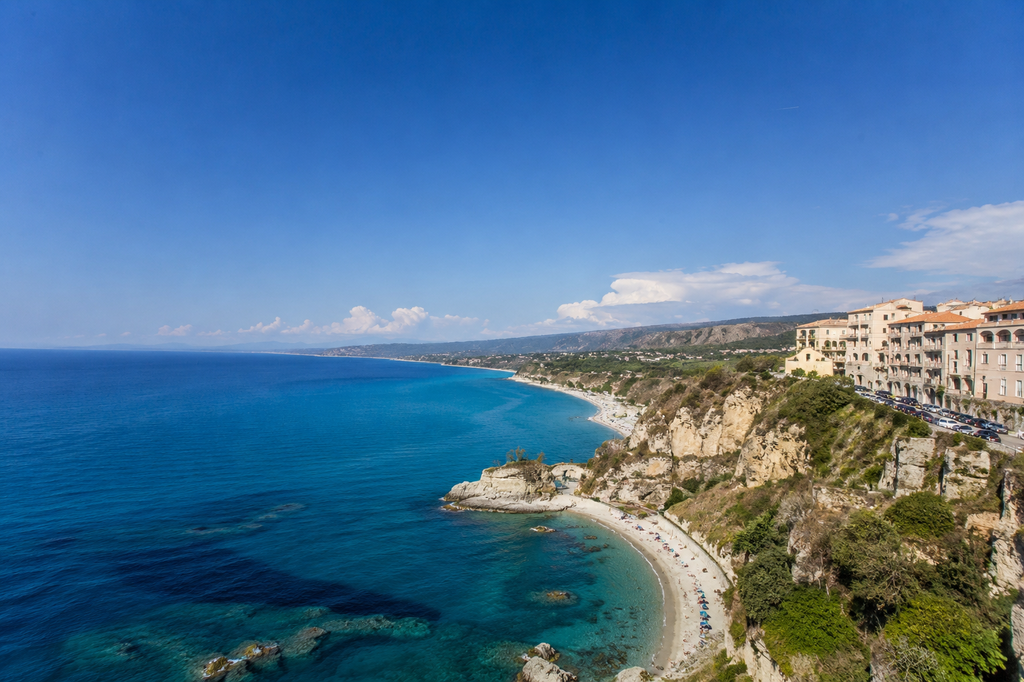
Whilst in summer the Amalfi Coast groans under the weight of millions of tourists and in Tuscany the car parks at the wine springs are already full by ten in the morning, something quite different is happening in Calabria. Namely, almost nothing. And that is precisely the point.
Calabria is Italy’s deepest south – the toe of the boot. A region that was labelled for so long as too remote, too unknown or too wild that it never really developed as a tourist destination. What remains: a landscape, a coastline and a cuisine that take your breath away. And not a single selfie stick in sight.
Anyone who has been there returns with one conviction: Calabria is the best thing you haven’t yet experienced in Italy. And anyone who rents a holiday home there quickly understands why the locals flash such a peculiar smile when tourists mention that they’d rather head north.
Why Calabria is still Italy’s best-kept secret
No crowds – genuine hospitality
In Tuscany today, you’d be hard-pressed to find a trattoria without a tourist menu. In Calabria, it’s the other way round. Here, you’re not treated as a holidaymaker, but as a guest. The barista asks if you fancy a grappa before bringing the bill. The neighbour of the holiday home brings over aubergines from her own garden. That sounds like a cliché – but anyone who’s experienced it knows that it’s the real deal.
Two seas, one region
Calabria is geographically unique: to the west lies the Tyrrhenian Sea with its steep cliffs and turquoise bays; to the east, the Ionian Sea with its wide sandy beaches. In between lies the Sila high plateau with forests, lakes and a tranquillity that is hard to find these days. For travellers who love variety, this geographical diversity is a gift.
The 5 highlights in Calabria that no travel guide should overlook
Tropea – the white town on the rock
Tropea is the one postcard image of Calabria that even die-hard northern Italians recognise: an old town perched on a rocky outcrop high above the sea, whitewashed houses, an ancient cathedral and, below, a beach whose water is so blue that at first you think it’s been photoshopped. It’s real. Tropea is the gateway to Calabria fever – anyone who’s been there once wants to come back immediately.
Costiera degli Dei – Coast of the Gods
The Coast of the Gods stretches between Tropea and Nicotera – and the name is entirely justified. Small coves alternate with cliffs, the water displays every conceivable shade of blue and green, and most beaches are accessible only via narrow footpaths. No beach kiosk, no sun lounger rental. Just you, your towel and the Mediterranean.
The Pollino Mountains – Hiking at the End of the World
Anyone who thinks Calabria is just about beaches hasn’t seen the Pollino yet. Italy’s largest national park offers hiking trails through primeval forests, past ancient pine trees and across plateaus where you might not meet a soul for days on end. In spring, the area is ablaze with blossoms that would drive any nature photographer wild.
Gerace – A medieval village frozen in time
There are many medieval mountain villages in Italy. But Gerace has something most of them no longer have it is almost deserted. No souvenir shops, no queues, no selfie sticks. Instead, cobbled streets, an 11th-century Romanesque cathedral and views over the Ionian Sea that leave you speechless. Gerace is the real Italy.
Reggio Calabria and the Riace Bronzes
Reggio Calabria’s National Museum houses one of the world’s most significant archaeological finds: the Riace Bronzes. Two Greek warrior figures from the 5th century BC, discovered by chance by a diver in 1972. Standing before them, one cannot comprehend how something so ancient can look so lifelike.
Calabrian cuisine: spicy, hearty and distinctive
Calabrian cuisine is the spiciest in Italy – and that’s not a criticism, but a promise. Nduja, a spreadable, spicy salami from Spilinga, is the Calabrian product that has taken the world by storm in recent years. On freshly baked bread, on pizza or in pasta – it’s everywhere. Anyone tasting it for the first time wonders how they ever managed without it.
Bergamot from Reggio Calabria – the only region in the world where this citrus fruit thrives – lends jams and desserts a unique fragrance. Liquorice from the Pollino area, marinated swordfish from Bagnara, homemade pasta with goat’s cheese and wild herbs – Calabria is a culinary treasure that has barely been unearthed.
Those staying in a holiday home in Calabria also have the invaluable advantage of shopping at local markets and cooking for themselves. The markets in small towns such as Serra San Bruno or Palmi are not tourist attractions, but a living part of everyday life – with farmers selling their vegetables on makeshift tables and prices still open to negotiation.
Calabria beyond the coast: the hidden mountain villages
Anyone who visits Calabria just for the beaches misses out on more than half the experience. The region is dotted with mountain villages that you won’t find in any glossy travel guide – and that is precisely why they are so special.
Stilo is one such village. Perched high above the Ionian valley stands the Cattolica di Stilo, a 9th-century Byzantine church, barely larger than a living room, yet of a precision and beauty that leaves one speechless. The climb through the village takes 20 minutes – and you’ll encounter no more than a cat along the way.
Civita, in the heart of the Pollino National Park, is an Albanian-Calabrian village whose inhabitants still speak Arbëreshë, a medieval Albanian dialect. The culture, the traditional dress, the food – everything here is different from the rest of Calabria. A living ethnographic museum that charges no admission fee.
Pentedattilo – the village of the five fingers – sits on a rocky outcrop that juts out of the hillside like a giant hand. Largely abandoned, reclaimed by nature, rediscovered by artists and adventurers. Here, you understand what an ‘insider tip’ really means.
These villages are not a stop for those in a hurry. They are a reason why renting a holiday home in Calabria makes more sense than staying in a hotel: those who are flexible, who don’t have a fixed check-out time, who take the car and simply drive – they will find moments here that cannot be booked.
Renting the perfect holiday home in Calabria – what you need to know
Who would benefit from a holiday home in Calabria?
A holiday in Calabria in a holiday home is the ideal accommodation for almost every type of traveller – but for different reasons.
- Families benefit from the independence: their own kitchen, no hotel restaurant, no fixed mealtimes. The children can have a shower after the beach without having to go through lifts and lobbies. Many holiday homes in Calabria have private gardens or pools – at prices that would be unthinkable on the Amalfi Coast.
- Couples find a romance in the restored trulli, masserie and old stone houses that a chain hotel can never match. Imagine an old Calabrian masseria: olive trees stretching to the horizon, a terrace overlooking the sea, the sound of crickets in the evening. It exists – and it costs no more than a mid-range hotel in Rimini.
- Groups and friends appreciate the sense of community: cooking together, having breakfast together, planning the day together. A large holiday home for six or eight people is often cheaper per person in Calabria than any other form of accommodation in a comparable region of Italy.
Where is the best place to rent a holiday home in Calabria?
The choice of location depends on what you’re looking for:
- Near the Coast of the Gods (Tropea region): ideal for water sports enthusiasts. The combination of spectacular scenery and easy access to the sea is unbeatable. Holiday homes are particularly in demand here – early booking is recommended.
- Sila high plateau: For anyone who appreciates peace and quiet, nature and cool nights, even in the height of summer. Perfect as a base for hikes and trips to both coasts.
- Ionian coast (Soverato to Brancaleone): family-friendly, quiet, with long, flat beaches. Here you can rent at the best value for money.
- Mountain villages (Gerace, Stilo, Pentedattilo): for explorers, photographers and anyone seeking the real Calabria – beyond sun loungers and parasols.
Tips for renting a holiday home in Calabria
If you’re thinking of renting a holiday home in Calabria, there are a few things to bear in mind:
- Book early: Good properties – particularly in the Tropea area – are often fully booked for July and August as early as winter.
- Check for air conditioning: Calabrian summers can be brutally hot. Air conditioning is not a luxury but a necessity – especially for families with young children.
- Location relative to the road: Some picturesque houses are situated on steep mountain roads, which can be challenging in the dark. Read photos and reviews carefully in advance.
- Wi-Fi situation: In remote locations, reception can be poor. Anyone working remotely or relying on streaming should ask about this explicitly.
- Make use of local contacts: Many landlords are genuine locals, not agencies. They know the best markets, the secret beaches and the restaurants not listed on TripAdvisor.
Getting to Calabria
The quickest way is to fly to Lamezia Terme (connections from Germany via Düsseldorf, Frankfurt, Munich) or to Reggio Calabria. By car, the journey from Germany takes around 16–20 hours – a pleasant option for many families with a stopover in northern Italy.
Important: In Calabria, you’ll need a car almost everywhere. The region is vast, and public transport is sparse. If you’re mobile, you’ll have far more options – and you’ll discover the beaches and villages that no bus serves.
Calabria for different types of travellers: What’s in it for you?
Calabria isn’t the same destination for everyone – it’s a destination that reveals itself differently to each person. That’s why it’s worth asking yourself: What are you looking for?
- A beach holiday with high standards: Capo Vaticano, Tropea, Soverato – you’ll never forget any of these beaches.
- Active holidays / hiking: Pollino National Park, Sila, Aspromonte – three high mountain ranges, countless trails, hardly any other hikers.
- Cultural trip: Greek temples in Locri, Byzantine churches, the Riace Bronzes, medieval mountain villages – Calabria is an archaeological wonder that cannot be fully appreciated whilst queuing.
- Culinary trip: Nduja, bergamot, liquorice, swordfish – a week in Calabria, and you’ll know what you’re missing back home.
- Digital nomad / workation: A holiday home with a terrace, sea views, a stable connection – and in the evening, the best espresso of your life for €1.10. Why would you ever want to sit in an office again?
FAQ – Frequently asked questions about holidays in Calabria
Is Calabria safe for tourists? Yes. Calabria’s reputation as a dangerous region is long outdated and based on stereotypes. Tourists are given a warm welcome. Common sense is all you need.
When is the best time to visit Calabria? September is the absolute insider tip: the sea is still warm (26–27 degrees), the heat of midsummer is over, the harvest begins, and the tourists have gone. May and June are also excellent.
Do I need a car in Calabria? Almost always, yes. Although public transport connects the major cities, most holiday homes and beaches are located away from them. A hire car is not a luxury, but a necessity.
How does Calabria differ from Tuscany? Calabria is rougher, wilder and less commercialised. Tuscany offers more infrastructure and wine culture. Calabria offers more authenticity, more spectacular nature and a deeper encounter with the real southern Italy.
Conclusion: Calabria – visit once, never forget
Calabria is no compromise. It’s not just “a nice alternative if you don’t fancy Venice”. It is a destination that surprises, overwhelms and delights you – in that order. Anyone who rents a holiday home there immerses themselves in a region that doesn’t bend to convention, that doesn’t put on a show and that doesn’t know what an Instagram spot is. A region that simply exists. Wild, loud, warm, fiery, blue.
And that is more than enough.