
- Via Francigena: Why This Pilgrimage Route Can Be The Experience Of A Lifetime
- Holidays In Italy With Dog: The 5 Most Dog-friendly Regions
Sea kayaking along the Tuscan coast: explore caves, coves and islands from the water
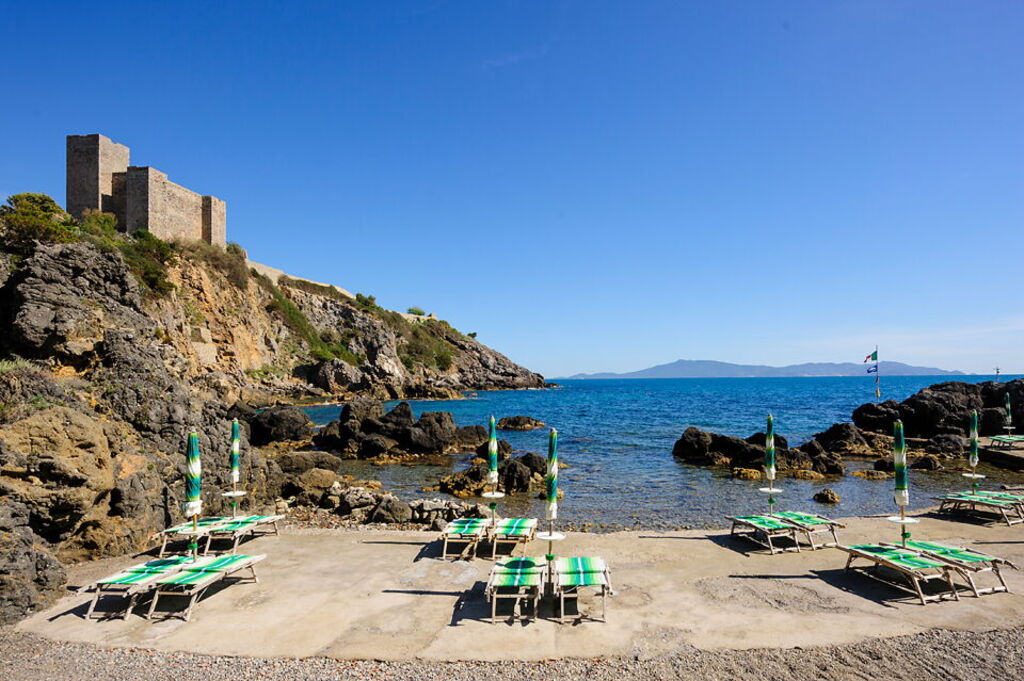
You’re lying on a beach in Tuscany; the water is turquoise, the rocky coastline behind you spectacular. You spot a cove in the cliff face, about 200 metres away. You can’t get there from your sun lounger. But you can from a kayak. Sea kayaking is the slowest, most intense and – if we’re honest – the most beautiful way to get to know the Tuscan coast. You paddle into places that aren’t marked on any tourist map. You discover caves where the light bathes the water in shades of blue and green that you’d think impossible. And you have breakfast on a rock that’s only accessible from the water.
You don’t need to be a pro. You don’t need experience on the open sea. But you should know what to expect – and where the best spots are.
Why Sea kayaking in Tuscany is an underrated experience
When you think of Tuscany, you think of hills, Chianti and Brunello. Yet the region has a coastline stretching from Lunigiana in the north to the Maremma in the south – with rocky cliffs, small coves, the Tuscan Archipelago with its seven islands, and an underwater world that ranks among the most beautiful in Italy. Most of it is invisible from the beach. From a kayak, it becomes visible.
And that is the crux of the matter: a kayak is not just a piece of sports equipment – it is a key. A key to places that millions of tourists pass by every year along the Tuscan coast without ever seeing them. The cave hidden behind a rocky outcrop. The tiny sandbank between two cliffs, big enough for just one towel. The inlet where, in the afternoon, the air is filled with the scent of wild rosemary wafting from the cliffs into the water.
The 5 most fascinating kayaking spots on the Tuscan coast
1. Elba – The island of a thousand bays
Elba is Tuscany’s kayaking paradise. The coastline is rugged, rich in small coves and caves, and the water is among the clearest in the entire Mediterranean. The west coast between Capo Sant'Andrea and Pomonte is particularly impressive: small caves, rock formations and tiny sandy beaches accessible only by water. Kayak hire is available in almost every major town.
Highlight: The Grotta dell'Alabastro near Patresi – a sea cave accessible only by kayak, where the light bathes the water in an otherworldly green hue.
What sets Elba apart from other destinations is the concentration of places to explore within a small area: In a single day’s paddling along the west coast, you pass historic fortress ruins, paddle through rock arches, land on hidden pebble beaches and often see more turtles than people. Kayak schools on Elba also offer multi-day tours around the island – for experienced paddlers, one of the most impressive coastal experiences in the entire Tyrrhenian Sea.
2. Argentario – Cliffs, watchtowers and turquoise waters
The Argentario is a peninsula in southern Tuscany with dramatic rocky cliffs and medieval watchtowers jutting out from the cliffs into the sea. The water is so clear that you can see the seabed from your kayak. For experienced paddlers, the connection to the Orbetello lagoon is also recommended – a peaceful paddling area with a unique character.
The Argentario has another advantage that is often underestimated on kayaking holidays: the connection to the Giglio Islands. In calm weather, the crossing from Porto Santo Stefano to Giglio takes two to three hours for experienced paddlers – and once you arrive, you set foot on an island that is hard to experience so authentically without your own boat or a ferry. An unforgettable destination for a multi-stage sea kayaking expedition.
3. Talamone and the Maremma Coast
If you prefer a quieter atmosphere, Talamone is the perfect place for you. This small fishing village lies on the southern edge of the Maremma Nature Park; the coastline is largely undeveloped, the beaches are empty, and the water is shallow and sheltered from the wind. Ideal for beginners and families.
If you’re lucky, you might spot pods of dolphins whilst paddling – the Maremma coast is famous for this. Particularly early in the morning between May and October, bottlenose dolphins are regularly sighted, drifting along in the wake of passing fishing boats. From a kayak, you’re much closer to the experience than from any motorboat: no engine noise, no exhaust fumes, no need to keep your distance. Just you, the kayak and the dolphins, curiously changing direction.
4. Capo Livorno and the Tuscan Archipelago
The coast south of Livorno and the crossings to the islands of Gorgona and Capraia are a real highlight for experienced paddlers. Capraia is one of the wildest and least visited islands in the archipelago – from the water, it reveals its most impressive side: steep cliffs of black basalt, hardly a house in sight, colonies of seagulls on the rocks.
Warning: The sea currents between the islands can be strong – always plan these tours with an eye on the weather and with sufficient experience.
5. The Cinque Terre coast – spectacular, but challenging
Technically speaking, the Cinque Terre is actually in Liguria – but it can be reached by kayak from the Tuscan coast. The view from the water is one of the most impressive in the entire Mediterranean: colourful fishing village panoramas, vineyards plunging straight into the sea, endless cliffs. Only attempt this with experience or a guide – but anyone who has seen it from a kayak will understand why this coastline is considered one of the most beautiful in the world.
When is the best time for sea kayaking in Tuscany?
September is the best time for sea kayaking in Tuscany – the water is still warm, boat traffic has died down, the light is softer and the coast belongs once again to those who truly want it. An often-overlooked advantage of the off-season: in April and May, you have most of the bays entirely to yourself. No motorboats chugging through the caves. No excursion boats turning around in front of the cave. Just silence, water and the sound of your own paddles.
Equipment and preparation
Rent a kayak or bring your own?
For a one-off trip, a hire kayak is the best option – hire shops can be found at practically every popular stretch of coastline, often including paddles, life jackets and a safety briefing. If you paddle regularly, it’s often better to bring your own inflatable kayak – these can be transported in the boot and are ideal for calm coastal waters.
Which is better – a single or a tandem kayak?
For couples or parents with a child, a tandem kayak is often the more comfortable choice: the more experienced paddler sets the pace, whilst the less experienced can paddle along or take a break. Single kayaks offer more freedom and manoeuvrability – ideal for anyone travelling alone or in pairs in separate boats.
Essential equipment for sea kayaking
- Life jacket – compulsory, even for strong swimmers
- Waterproof bag for phone, keys and valuables
- Water-resistant sun cream with SPF 50+ and protective headgear are a must!
- Drinking water: at least 1.5 litres per person per trip
- Signal whistle or small signal horn
- Weatherproof clothing for the return journey
- Map or GPS app (e.g. Navionics) for coastal navigation
What many forget – but regret
- Underwater camera or waterproof mobile phone case – the caves are simply too beautiful not to capture
- Sandals or water shoes for rocky landing spots
- Small first-aid kit (plasters, disinfectant – rocks are rough)
- Packed lunch and light snacks for breaks on the water
- Neoprene socks for trips before May or after October
Safety rules – more important than any equipment
Never paddle alone on the open sea. Always let someone know your planned route and estimated return time. Check the weather forecast the night before and, in the morning, – Mediterranean weather can change quickly. Stay close to the coast if you have no experience of open waters. Respect marine protected areas and their restrictions – they protect the underwater world you’re admiring.
Guided tours vs. going it alone
For first-time paddlers and anyone wanting to discover the most outstanding spots, guided tours are highly recommended. A knowledgeable guide not only knows the most interesting caves but also knows when the weather will change and which restaurant at the harbour serves the most exquisite fish soup.
Half-day tours cost from around 40–60 euros per person, full-day excursions up to 120 euros. This usually includes the kayak, life jacket, guide and often a light meal or snack on the water. Many operators – particularly on Elba and the Argentario – have German or English-speaking guides.
Anyone paddling on their own should have completed at least one introductory lesson, carried a coastal map or GPS app, and ideally travelled in pairs or small groups. The Tuscan coast is well-marked – but the open sea makes no allowances for mistakes.
Kayaking holidays in Tuscany: How to plan the perfect combination
The beauty of a kayaking holiday along the Tuscan coast is that it combines so wonderfully with everything else. Tuscany isn’t just about the coast – it’s about wine, culture, cuisine and nature. If you have a week, you don’t have to choose.
A suggested itinerary for seven days:
- Days 1–2: Arrival, settling in, first guided kayaking tour in a sheltered bay
- Day 3: Full-day kayaking expedition along the cliffs, picnic on the water
- Day 4: Ferry to Elba, kayaking tour to the Grotta dell’Alabastro
- Day 5: Break from paddling – winery in the Maremma hinterland, market, local cuisine
- Day 6: Morning tour on calm seas (best conditions before 10 am), afternoon free
- Day 7: Take your time saying goodbye – final breakfast on the terrace, last glimpse of the sea
All this works best if you’re not staying in a hotel. A holiday home on the Tuscan coast offers the freedom a kayaking holiday needs: getting up early without worrying about breakfast times, storing wet kayaking gear safely somewhere, and grilling fresh fish on your own terrace in the evening. And in the morning, when the sea is still as smooth as glass, simply set off.
FAQ – Frequently asked questions about sea kayaking in Tuscany
Do I need a permit to go kayaking in Italy? No. No permit is required for simple sea kayaking near the coast in Italy. Restrictions apply in certain marine protected areas – check with your local rental company beforehand.
Can I go sea kayaking as a complete beginner? Yes – with the right tour. Guided beginner courses in sheltered bays are available even without any prior experience. Start in calm waters and build up slowly.
Are there kayaking courses in Tuscany? Yes, there are established kayaking schools, particularly on Elba, in Livorno and along the Maremma coast. Recommended: a half-day beginner’s course before your first longer tour.
Which islands can be reached by kayak? From Elba, in calm weather, Capraia or Pianosa. From the Argentario to Giglio. Always plan with weather conditions in mind and sufficient experience – island crossings are for advanced paddlers.
Is sea kayaking in Tuscany dangerous? Not necessarily – but like any water sport, it requires respect for the sea. Anyone who follows the basic rules and never paddles in bad weather will have a very safe experience.
How much does it cost to hire a kayak on the Tuscan coast? A basic kayak hire without a guide costs around €15–30 per hour or €50–80 per day. Guided half-day tours cost €40–60, and full-day tours up to €120 per person.
Conclusion: A kayak is your key to the parts of Tuscany that no coach tour can reach.
The Tuscan coast is well known. A kayak reveals it anew. It changes your perspective – literally – and reveals a coastline that looks flat and unassuming from the beach, but from the water becomes a landscape you’ll never forget. The cave that smells of salt and silence. The bay where your kayak is the only boat. The moment when you paddle out of a rock arch into the open sea and the coast unfolds before you like a page in a book that you’ve just opened. No deckchair in the world can offer that.