
- Quality During A Holiday In Italy Cannot Be Counted – But Understood
- Sustainable Travel In Italy – Consciously, Relaxed, And Without Compromise
Enjoying summer in Italy – without the heat, hustle, and mass tourism
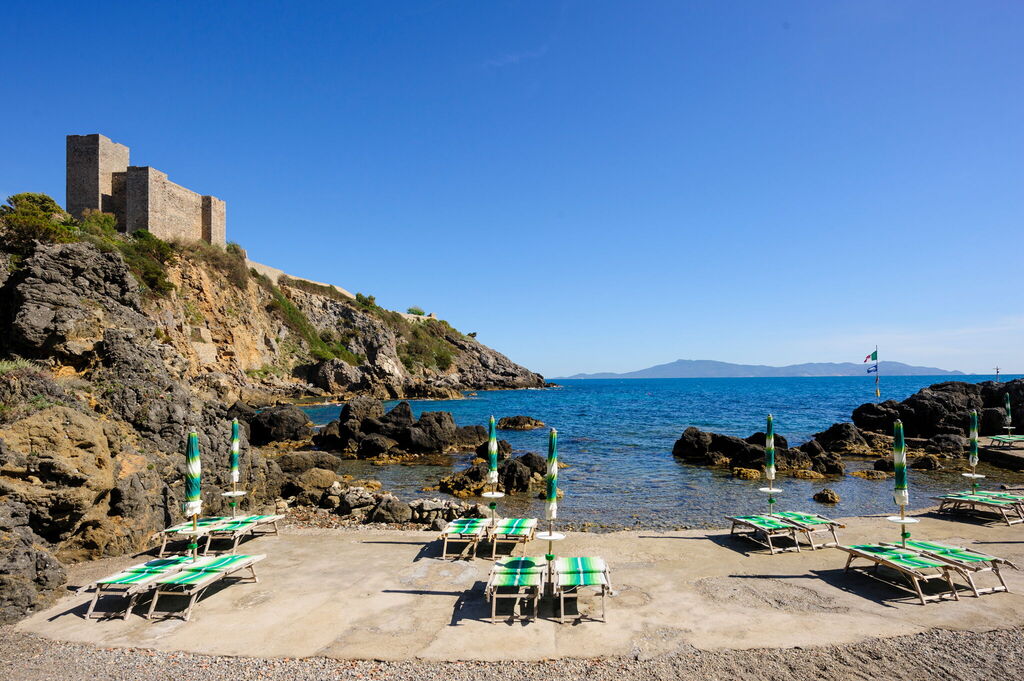
Stress-free vacation in Italy: regions that work even in summer - why heat, hustle, and high season are not a law of nature
Summer holiday in Italy – between longing and overwhelm
Italy is one of the most popular summer travel destinations in Europe. Sun, sea, cuisine, landscapes, and culture attract millions of travellers every year. At the same time, many now associate the Italian summer with crowded beaches, heat, traffic jams, and overloaded infrastructure. The idea of a relaxing holiday hardly seems compatible with July or August anymore. But this perception is only part of the reality. It mainly concerns certain regions, certain types of travel, and certain expectations. Italy as a whole works in the summer too – if you know where and how.
This article shows why stress during a vacation in Italy is not necessarily a summer phenomenon, which regions work well even in the high season, and what travellers should pay attention to if they want to experience Italy in a relaxed manner during the summer.
The myth of the overheated summer: where the image comes from
The idea of a stressful summer vacation in Italy does not arise by chance. It is fed by several factors that reinforce each other. Particularly well-known places like the Amalfi Coast, Venice, or Florence are exemplary of a tourist concentration that coincides with extreme temperatures and infrastructure bottlenecks. These experiences are often generalised – leading to the assumption that all of Italy reaches its limits in the summer. The Italian summer cannot be squeezed into a single experience. The geographical, climatic, and cultural diversity of the country offers very different conditions for a relaxing vacation – even in the peak season.
Italy is not a climatically homogeneous area
Italy stretches over more than a thousand kilometres in a north-south direction and encompasses a variety of climate zones: alpine high mountains in the north, continental plains in the Po Valley, Mediterranean zones along the coasts, and dry-hot regions in the south. While the Lombardy region can be muggy, a constant wind blows along the Tyrrhenian coast. In the Abruzzo, high altitudes ensure cool nights, while Sicily already offers swimming weather in May. Those who travel to Italy in the summer, therefore, do not have to endure the heat – one just needs to know where their own needs fit with the respective region.
Microclimate instead of macro cliché
Not only between north and south, but also in the smallest spaces, there are climatic differences. Valleys, plateaus, wind conditions, and vegetation often influence temperatures more than geographical latitude. So, a village at 600 meters can be more pleasant than a seaside resort at sea level. A relaxed summer holiday therefore begins with choosing the right altitude, orientation, and ventilation – not with giving up on Italy.
Regional alternatives to coastal overcrowding
The classic Italian experience for many tourists, both female and male, focuses on the sea. Coastal towns, beaches, and promenades are heavily frequented during the summer months. But those who venture inland will find not only more tranquillity but often also more favourable climatic conditions. Regions such as the Marche, Umbria, or the interior of Tuscany offer an attractive combination of gentle hilly landscapes, historical heritage, and functional everyday infrastructure. Many of these places are not designed for quick throughput, but for long-term usability – a quality that pays off especially in the summer.
High altitudes as a natural climate buffer
A key factor for well-being in the summer is the altitude. Even a difference of 300 to 500 metres in altitude can noticeably lower temperatures. Regions in the Apennines, in Abruzzo or in Calabria often offer bearable summer temperatures - even without air conditioning. Those who are not looking for the sea, but for relaxation, will find a pleasant balance between warmth and freshness in these high-altitude areas.
Southern Italy: not hotter, but differently organised
Southern Italy is often portrayed as too hot. In fact, the temperatures there are high – but they are also historically integrated. Architecture with thick walls, shaded courtyards, siesta traditions, and evening activities show: The South has learned to cope with heat over the centuries. A summer holiday in Apulia or Sicily is therefore not a risk, but a cultural offer: Those who are willing to adapt to the regional rhythm will be rewarded with a harmonious daily routine and surprisingly low stress.
Islands reimagined: away from the beaches
The Italian islands are notorious in the high season for crowded ferries, expensive accommodations, and overcrowded bays. But here, too, the hustle and bustle are concentrated in a few areas. Island regions such as the interior of Sardinia or the highlands of Elba offer alternative perspectives: fewer beachgoers, more scenery, quieter places. Those who are willing to break free from the coastal fixation will discover relaxed summer spots even on well-known islands.
Medium-sized cities and everyday places as summer destinations
While metropolises like Rome or Milan suffer from their own heat retention in the summer, smaller cities often present themselves as ideal retreats: well-equipped, culturally interesting, and structurally manageable. Places like Lucca, Arezzo, Lecce or Trento combine urban infrastructure with a pace of life that allows for relaxation even in the high season. If you can't avoid the summer heat, you should learn to experience it in smaller, slower cities.
The underrated role of the daily rhythm
Many stressful moments during summer vacations arise not from external conditions, but from a lack of adaptation to local rhythms. In Italy, it is normal to work in the morning, rest at midday, and live in the evening. Anyone who tries to visit museums or go on excursions at 2 p.m. in 95-degree heat will fail – not because of the country, but because of their own planning. The Italian summer works in stages. Those who pick up this rhythm will experience even hot days as well-structured.
Infrastructure determines recovery
The importance of functioning infrastructure should not be underestimated. Regions with short distances, medical care, reliable local transport, and accessible local supply offer more than just convenience – they reduce stress. In many smaller regions of Italy, this infrastructure works better than in the overcrowded coastal areas. Those who do not have to constantly improvise recover faster – regardless of the outside temperature.
The right type of travel for the summer
Round trips and changes of location sound tempting, but during the high season, they can become a burden. Status, changing accommodation and orientation require more energy in the heat than at other times of the year. A stationary form of travel – such as a longer stay in a holiday home or a city apartment – allows one to adapt to the local rhythm, get familiar with the surroundings, and act at one's own pace.
Quality over Quantity
A few, consciously chosen experiences beat hectic programs. Those who travel in the summer should reduce the expectation of seeing everything – and instead focus on the experience.
Expectations control the stress level
Many disappointments during the summer vacation arise not from real problems, but from a discrepancy between expectation and reality. Those who seek peace but head for tourist hotspots will be disappointed. Those expecting activity but experiencing midday emptiness will be disappointed, too. A relaxed Italian holiday begins with honest questions: What am I looking for? What do I really need? What am I willing to let go of?
Conclusion: Summer is not an enemy
Italy in the summer is not a problem, but a realm of possibilities. The heat is real, the high season noticeable – but neither widespread nor necessarily stress-inducing. Those who are willing to engage with the country, its rhythms, and its diversity will find places and ways to find peace even in the high season. Summer stress is not a natural law. It is the result of false assumptions – and can be avoided through conscious decisions.
Not by avoiding Italy. But by understanding it better.