
- A Holiday Home Or A Hotel In Italy – Which Is Worth It?
- Vendemmia: Experience The Grape Harvest In Tuscany Up Close
Olive harvest in Tuscany: When autumn smells of fresh oil
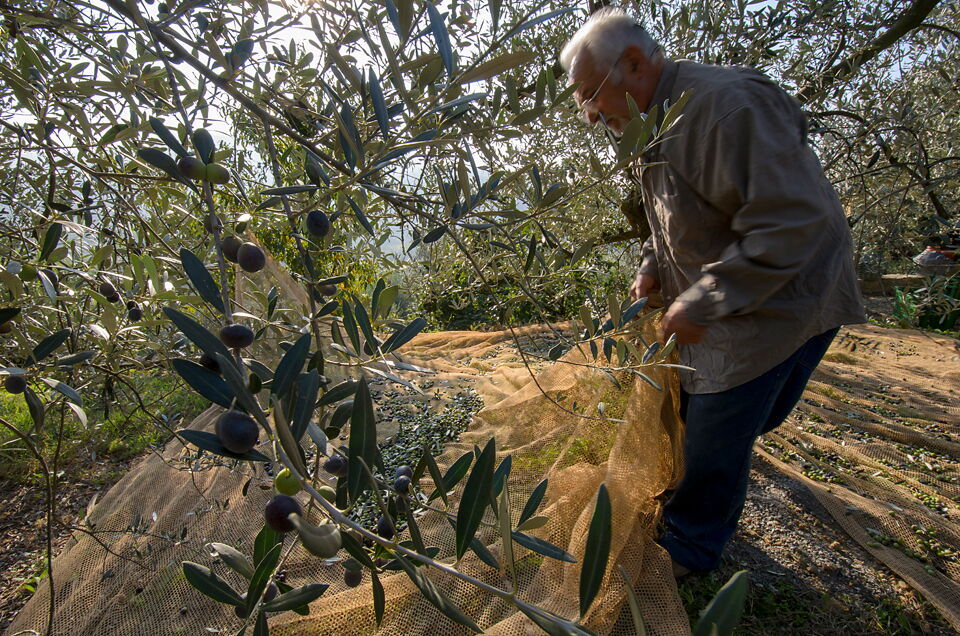
In November, something changes in Tuscany. The summer crowds of tourists have long since departed, the grape harvest is over, and a different light lies over the hills – deeper, more golden, almost melancholic. But amongst the silvery-shimmering olive groves, something is happening: nets are being spread out, ladders leaned against trees, and whole families are gathering for a ritual that has been practised here since ancient times. The olive harvest, ‘la raccolta delle olive’, has begun.
For travellers wishing to experience Tuscany outside the traditional summer season, this is one of the most memorable times of all. Renting a holiday home at this time of year means becoming part of a centuries-old cycle, rather than simply watching it from the terrace.
More than just a staple
In Tuscany, olive oil represents identity, craftsmanship and, for many families, a piece of living history. The trees being harvested today have often stood in the same spot for generations. Some groves around Lucca or in Chianti date back to plantations older than any country house in the area.
Harvesting usually takes place between late October and late November, depending on the region and the desired degree of ripeness. For an intense, slightly pungent oil, the olives are picked early, whilst they are still green. For a milder flavour, producers wait until the fruit is dark, almost violet, black. This question – exactly when to harvest – preoccupies producers anew every year, and it is rarely left unmentioned at any dinner table in Tuscany.
Get stuck in
Many agriturismi and smaller producers open their groves to visitors during the harvest season. Unlike large-scale industrial operations, work here is usually still carried out traditionally: nets are laid out beneath the trees, then special rakes – or simply bare hands – comb through the branches until the fruit falls onto the net. It’s painstaking work, but surprisingly meditative – a stark contrast to the fast-paced daily life that many travellers from the north bring with them.
With a bit of luck, you’ll head straight to the frantoio, the oil mill, where the morning’s harvest is pressed within hours. This is known as ‘Olio Nuovo’: an intense green colour, with a peppery sharpness on the finish, clearly distinguishable from older vintages. Tasted on fresh, warm country bread, with nothing but coarse salt, you immediately understand why these few weeks of the year are a small celebration for many Tuscans.
At the frantoio
Nowadays, the journey from tree to bottle usually involves gentle cold-pressing methods. The olives are washed, ground into a paste in a mill, then separated into oil, water and pomace by centrifugation. Speed is crucial: ideally, no more than 24 hours should elapse between harvesting and pressing, otherwise oxidation begins.
In many smaller frantoi, the entire process can be observed, often separated from the pressing room by nothing more than a pane of glass. The intense, almost vegetal scent that wafts through the air there is one of the most distinctive sensory experiences of a Tuscan autumn.
Anyone who wishes can take home a small amount of oil pressed from their own olives – either those they have brought with them or harvested themselves – a souvenir that no shop can sell.
Not all extra virgin olive oils are the same
Extra virgin olive oil must meet strict chemical and sensory criteria: low acidity, no flavour defects, and an aroma profile that varies greatly depending on the growing region. At tastings, which many estates offer throughout the season, you learn to look out for three things: ‘fruttato’, the fruity intensity; ‘amaro’, the bitterness; and ‘piccante’, the peppery heat in the throat that fresh oil typically triggers – a slight cough included, and that’s not a fault, but a promising sign. This pungency comes from polyphenols, which are present mainly in the first few weeks after pressing.
Frantoio, Moraiolo and Leccino, the dominant varieties in Tuscany, typically produce intense, slightly bitter oils with a distinct pungency – a clear contrast to the milder, fruitier oils of southern Italy or Greece.
Fettunta and other rituals
The arrival of the new oil is celebrated in Tuscany with a simple, symbolic tradition: the fettunta. A slice of toasted, still-warm country bread, rubbed with a cut-open clove of garlic, generously drizzled with fresh oil and sprinkled with coarse sea salt. That’s all it takes to savour the full flavour of the new harvest – in practically every frantoio that welcomes visitors, this very ritual is celebrated.
Ribollita, the classic Tuscan bread and bean stew, is only finished off with a generous dash of fresh oil just before serving. Soups, grilled vegetables – many restaurants in the growing regions deliberately adapt their menus at this time of year to put the new oil centre stage.
A long history
The olive tree has been a part of Tuscany since the time of the Etruscans, who presumably adopted its cultivation from Phoenician and Greek traders. During the Middle Ages and the Renaissance, olive oil became a key economic commodity, exported as far as Northern Europe.
It is worth noting that many of the trees harvested today are themselves witnesses to recent history. The harsh winter of 1985 brought record-breaking cold to large parts of Tuscany, causing numerous older trees to freeze to the root. Many of today’s groves have sprouted anew from precisely these rootstocks – their true age therefore often extends far beyond what is visible on the surface.
A neighbourhood celebration
In smaller communities, particularly in the Lunigiana, people traditionally help one another with the harvest – la reciprocità. Today it’s the olives from one plot, next week those from another. This close-knit neighbourhood culture, combined with a communal lunch at the end of each day’s harvest, makes the harvest season one of the most socially vibrant times in these villages’ annual calendar. A single visit to a frantoio can quickly lead to an invitation to one of these communal harvest days – a form of hospitality that, away from the overcrowded tourist centres, is still remarkably commonplace.
Regions with a vibrant olive oil culture
Lucca is one of Italy’s oldest and most renowned regions. The oil produced there bears its own DOP designation with strict criteria of origin.
Chianti often combines wine and oil in the same place – many wineries also produce their own oil, so that both can be tasted together.
Lunigiana, in the north on the border with Liguria, remains largely undiscovered by tourists: terraced groves, small stone villages, a down-to-earth, impenetrable tranquillity.
Maremma combines a Mediterranean climate with coastal locations; production here is often organised on a smaller, family-run scale.
The right holiday home
November calls for a different kind of holiday home to that of the height of summer. Instead of a swimming pool and a shaded terrace, a fireplace, a well-equipped kitchen and proximity to an active olive grove now take centre stage. Many country houses in this region are themselves part of small estates with their own olive oil production – guests can purchase the freshly pressed oil directly on site, sometimes still warm from the mill.
If you opt for a property with its own grove in the garden, with a bit of luck and the landlord’s permission, you may even be able to harvest the olives from the trees right on your doorstep. This offers a small, authentic taste of country life right on your own terrace.
Demand for holiday homes is significantly lower outside the summer months, meaning that more spacious country estates – which are otherwise rarely available – can be rented on attractive terms.
Frequently asked questions about the olive harvest in Tuscany
When is the best time for the olive harvest?
Between late October and late November, with regional variations depending on the desired degree of ripeness of the olives.
Can tourists take part in the olive harvest?
Yes, numerous agriturismi and smaller olive oil producers offer harvest days for visitors, often followed by a visit to the mill and a tasting session.
What is Olio Nuovo?
The freshly pressed oil from the current harvest: intensely green, fruity, with a characteristic peppery tang.
Which region is particularly suitable for an olive oil holiday?
Lucca for tradition and DOP quality; the Lunigiana for tranquillity and unspoilt charm away from the tourist crowds.
Is it worth renting a holiday home in Tuscany outside the summer season?
Yes – lower prices, greater availability, and a quieter, more authentic experience of the region.
Those who visit Tuscany in autumn discover a different side to the region – quieter, more down-to-earth, with the scent of fresh olive oil in the air. ItalicaRentals will find the perfect country house for this very time of year.