
- Holidays In The Shadow Of The Etruscans – Experiencing History In Tuscany
- From Everyday Life To Mindfulness – How Italy Slows Us Down
From Olive Oil to Limoncello: Discovering Homemade Specialties
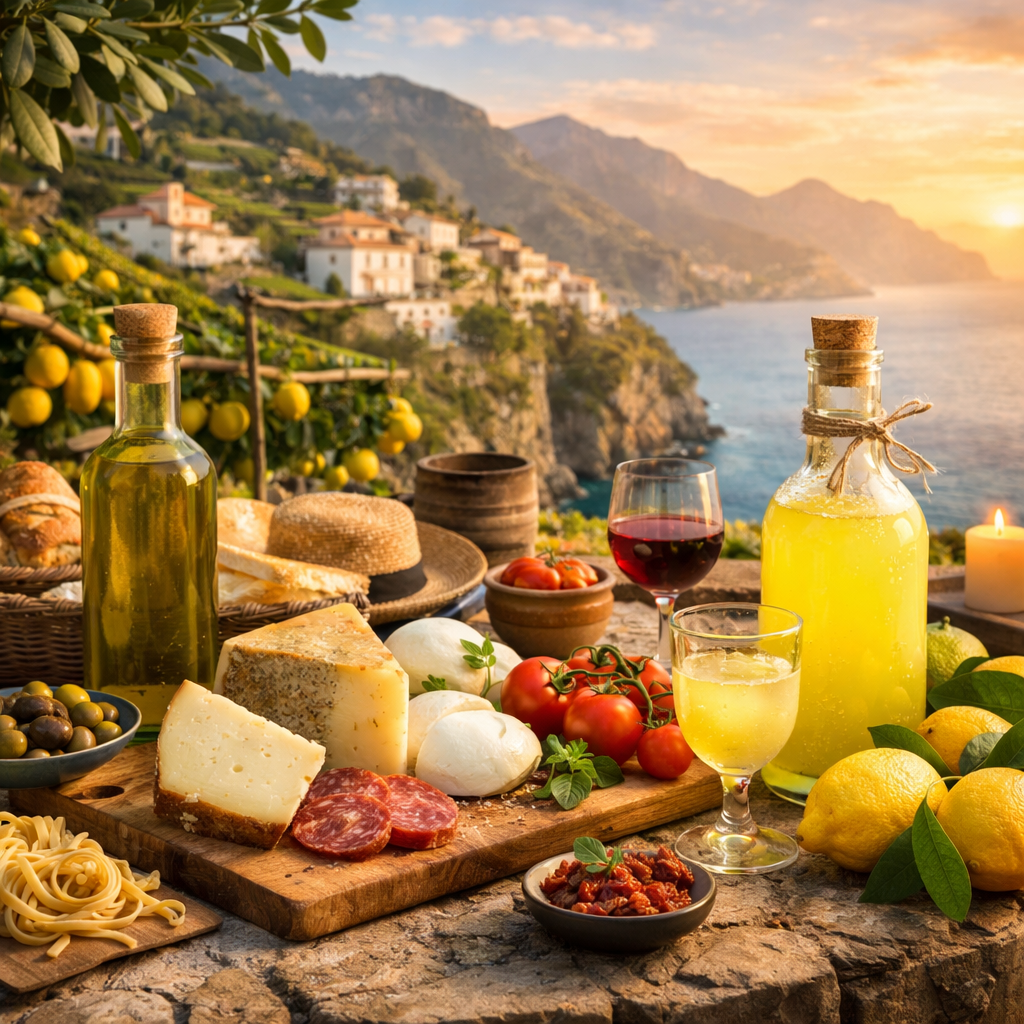
A culinary journey through Italy – and why true pleasure begins where tradition lives.
When Italy becomes more than a destination – it becomes a flavour
Some countries you visit. Others, you taste. Italy undoubtedly belongs to the latter. The moment you arrive in a small village, step onto sun-warmed cobblestones, or catch the scent of lemon blossoms and olive wood in the air, you feel it: Here, food is more than sustenance. It’s culture, pride, and a way of life.
Tasting specialties, discovering generations of stories
To discover specialties in Italy is to discover people. Behind every bottle of olive oil, every glass of limoncello, every slice of cheese, lie stories handed down through generations – shaped by seasons and kept alive through the art of craft. It is this closeness – to the ingredients, the process, and the hands that work with patience and devotion – that makes Italian flavour so unmistakable.
This article will guide you to the places and people for whom culinary tradition is not a marketing term but a way of life. From the first drop of olive oil to the last sip of limoncello, from farm to la cucina della nonna – discover how to experience Italy with all your senses, ideally from the heart of a holiday home surrounded by nature, village life, and genuine warmth.
Olive oil – Italy’s green gold
In Italy, olive oil isn’t just a product. It’s a cultural treasure. A reflection of land, climate, and history. Each region imparts its own character – sometimes bold and peppery, other times delicate and floral. The differences aren’t merely geographical – they reflect the hands and hearts behind the oil. To witness an olive pressing is to realize this is no industrial process, but a focused, reverent ritual. Freshly harvested olives are pressed in small family-run mills – slowly, at low temperatures, beneath traditional stone wheels or gentle modern machines. No drop is rushed – and you can taste the difference.
The personality of olive oil
A proper tasting reveals the full personality of an olive oil. This is not about bread as a vehicle, but the oil itself – its aroma, its sharpness, its fruitiness, its bitterness. A good olive oil tells stories – of meadows, of winds, of the harvest moment. It speaks of respect.
Limoncello – a sunny sip of dolce vita
Limoncello is more than a liqueur. It’s a feeling. With each sip, you don’t just taste lemon – you taste sun on stone, sea breeze, and that quiet moment between day and night. Along the Amalfi Coast, limoncello reveals its full soul – crafted from Sfusato Amalfitano, those large, aromatic lemons with thick, oil-rich peels. The making is a slow, gentle dance: the zest is finely peeled, steeped in alcohol, left to rest for days, then blended with sugar syrup. No chemicals, no colourings. Just fruit, spirit, time – and a love for simplicity.
Irregularity as a promise
Homemade limoncello tastes different from factory-made. Less sweet, more alive, with subtle shifts from year to year. This irregularity is not a flaw – it is its promise: here, a human created, not a machine.
Regional treasures – where tradition meets taste
Italian cheese does not come from cold display cases. It is an expression of region, of climate, of lived experience. Whether it’s a piece of Tuscan pecorino, Lombard taleggio, or fresh Apulian burrata – behind every bite is a craftsperson who didn’t just learn the trade but grew up with it. Tasting a still-warm piece of cheese at a local market, the scent of hay and milk in the air, as the vendor tells how his mother used to test the curd by hand – this isn’t a romantic sidebar. It is the very heart of culinary Italy.
Humility and mastery in every bite
Here, pasta and bread aren’t just sides. They are expressions of humility and skill. Two ingredients – flour and water – are enough to create something with soul. In the hands of an experienced nonna, dough becomes poetry. And a loaf of bread, baked in a wood-fired oven with natural sourdough, crackles like a promise when sliced.
Liqueurs, jams, syrups – even Italy’s sweetest sides follow the same principles. Whether Mirto from Sardinia, Nocino from Emilia-Romagna’s walnuts, or fig and chestnut preserves – they all come from what is naturally available, at the right time, made with patience and respect.
Why specialties taste best where they were born
You can take olive oil home. Or ship limoncello. But the true flavour isn’t only in the product – it’s in the moment. A glass of limoncello on a terrace overlooking the sea. A taste of olive oil on a slice of bread, with the very trees that bore the olives swaying beside you. The scent of freshly baked focaccia drifting through the open window of your holiday home.
The difference between consumption and experience
In a holiday home, food isn’t served – it happens. You go to the market yourself, see tomatoes in baskets, olives in bowls, cheese on straw boards. You taste, ask questions, learn, linger. Then you bring your finds into your own kitchen. You cook without pressure, without a menu – just with joy, instinct, and a glass of wine in hand.
How to find the real thing
The best discoveries are rarely planned. Sometimes it’s a handmade sign by the roadside, a conversation in the village square, or a glimpse into a courtyard scented with herbs. Those who travel slowly, look openly, and expect less, often find the most.
Ask the locals
A valuable tip: ask the locals. No one knows the true artisans better than those who live nearby. Sometimes doors will open that no guidebook mentions – to a small olive mill, a hidden wine cellar, or a bakery that only fires up on request.
Regions of flavour
In Tuscany, character meets tradition. The olive oils here don’t aim to please – they speak their truth: bitter, sharp, complex. At small mills, you can taste, compare, and talk with the producers. Often, just a few words are enough to sense their passion.
Puglia, Sicily, and the Amalfi Coast
On the Amalfi Coast, limoncello greets you at its source. Lemon groves cling to terraces, their fragrance filling entire villages. The liqueurs made here aren’t mass-produced – they taste of family, of sunshine, of the stone terraces that nurtured the fruit. In Puglia, life is rustic and proud. Not only are the oils extraordinary, but so too are mozzarella and burrata, tomato sauces that conjure emotion with the simplest ingredients. And in Sicily, every product seems to carry a little more sun – pistachios, almonds, oranges, candied fruits. Sweetness here isn’t indulgence – it’s joy made edible.
Holiday homes as stages for flavour
A holiday home is more than a place to sleep. It’s a stage for connection – with the land, with local products, with yourself. The chance to sip espresso on the terrace at dawn, cook lunch with village-sourced ingredients, and dine under the stars with friends turns a trip into something truly personal. Accommodations like those from ItalicaRentals offer exactly this: homes with soul, in places where flavour lives. You stay near the producers, the markets, the farms. You’re not a guest in a hotel – you live as part of the place. Picture returning from the market. The table is set. The bread still warm. The olive oil glows in the golden light. And the limoncello is waiting in the freezer. That’s Italy – as it should be.
Conclusion: Where Flavor Becomes Memory
Olive oil, limoncello, cheese, pasta, liqueurs – these specialties are more than just food. They carry stories, emotions, traditions. And their true essence doesn’t shine from a shelf – it comes alive in the moment. Those who travel, taste, and take time will find more than flavour. They’ll find connection. To a land. To its people. And to a part of themselves that daily life often forgets – the part that delights.
Italy begins where flavour is real – and where you're ready to let it in.