
- For Return Travellers To Italy: Where To Travel When You Already Know Rome, Florence And Venice
- Why The Question Of The “best Time To Travel” To Italy Often Leads Us Astray
Village festivals few know about – when a trip to Italy is truly worthwhile
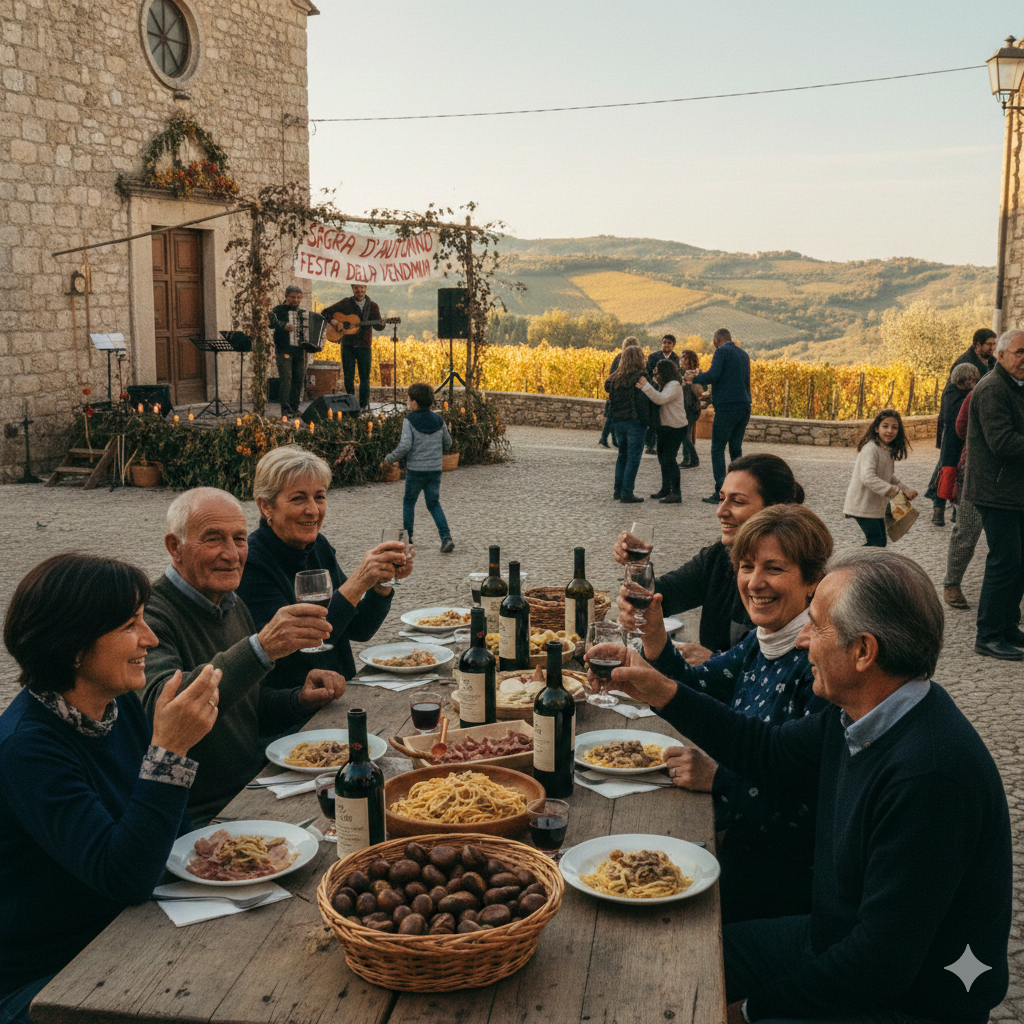
Italy celebrates quietly – and that's where real travel begins
Italy is considered one of the liveliest countries in Europe. Music, voices, gestures, and communal meals shape the image many travellers take with them. But this image is often limited to big cities, famous spots, and media-friendly events. A deeper look reveals: the real celebrations in Italy don't happen where crowds are directed, but where everyday life is lived.
In small towns off the beaten track, festivals follow a local rhythm. They are not aligned with holiday seasons but with harvest cycles, religious calendars, and historical memories. These village festivals don’t exist to be seen — they take place simply because they always have. And that’s precisely why they’re so valuable to travellers.
A holiday built around such occasions fundamentally changes one’s perspective of the country. You don’t travel to consume sights, but to become part of a moment.
Village festivals as the social backbone of Italian communities
In many regions of Italy, village festivals serve a function far beyond entertainment. They structure the year, bring people together, and keep traditions alive that no longer have a place in everyday life. Preparations begin weeks or even months in advance. Associations, parishes, and families work together on the program, food, and rituals.
These festivals are rarely spectacular in an outward sense. There are no big stages, no international performers, no clear start or end times. Instead, an atmosphere develops over hours or even days. People come and go, pause, sit together, and share meals.
For travellers, this means those who are attentive experience Italy not as a performance, but as a system of relationships.
Why village festivals are so special for travellers
Village festivals open spaces that are otherwise closed. They offer insight into local networks, family structures, and the value placed on community. While museums explain and landmarks guide, village festivals allow for observation and participation. Another important factor is their temporality. Village festivals are fleeting — if you miss one, you can’t simply make it up. This limitation gives them an intensity that planned attractions often lack.
Additionally, these festivals often take place outside of the peak tourist season. Those who plan their trip accordingly travel more consciously, more peacefully, and often more affordably.
For many experienced travellers in Italy, these aspects are crucial:
- the feeling of being welcome without being the centre of attention
- the chance to experience regional cuisine in its original context
- the experience of becoming part of a local moment
This combination makes village festivals an ideal yet underutilized reason to travel.
Regional diversity in the culture of village festivals
Italian village festivals vary greatly by region. In the north, agricultural cycles dominate, while in the south, religious festivals play a stronger role. In central Italy, the two are often interwoven.
In Molise, for example, autumn is shaped by chestnut, grain, and wine festivals. The towns are small, the landscapes vast, the festivals modest. Visitors stand out but are not seen as outsiders. Conversations arise casually, often without a shared language.
In Basilicata, many festivals are deeply religious. Processions, chants, and rituals appear archaic, sometimes unfamiliar, but always sincere. They express a regional identity preserved over centuries.
Le Marche combines these traditions with a diverse landscape of mountains, hills, and coastline. Village festivals here are often culinary in nature, reflecting the region’s agricultural ties.
What unites all these regions is their limited tourist exposure. Festivals are not adapted, explained, or commercialized. They remain what they are — and that’s what makes them so valuable.
The right time to travel: Italy beyond peak season
Most village festivals occur during periods with little tourist attention. Spring is shaped by religious events and local holidays. Late summer and autumn focus on harvest, wine, and regional products.
Especially the time between mid-September and the end of October offers ideal conditions. The summer heat has faded, the light is softer, the pace slower. Many places feel like themselves again, not like backdrops.
Travelers who come during this time experience Italy in a state many locals consider its most beautiful. It’s a phase of reflection, not of hustle.
Why a holiday home is the best choice
Village festivals are hard to combine with classic hotel structures. Many small towns have no hotels at all or only very simple accommodations. A holiday home, on the other hand, fits organically into the village.
It offers comfort and enables a type of travel that suits village festivals. You arrive, shop at the market, live for a few days by local rhythms. After the bustle of the festival, you return to a private space without leaving the village.
Especially during multi-day festivals or in regions with several nearby events, a holiday home offers both flexibility and tranquillity.
Village festivals as the key to understanding Italy
Those who experience village festivals understand more quickly why Italy is so deeply shaped by local identities. The country is not a homogeneous whole, but a mosaic of regions, dialects, traditions, and memories. This diversity reveals itself not through grand narratives, but through the details — in how people cook, in the songs they sing, in the gestures shared between people who have known each other for decades. A holiday centred around village festivals is not spectacular, but it’s a lasting way to connect with Italy.
Conclusion: sometimes travel means following the calendar
Italy is not only discovered through places, but through timing. Those willing to plan their trip around this discover a country that doesn’t explain itself — it shows itself.
Village festivals are not attractions. They are invitations. Those who accept them don’t just travel differently — they travel more deeply.