
- Digital Detox In Tuscany: Offline Among The Olive Hills
- Village Festivals Few Know About – When A Trip To Italy Is Truly Worthwhile
For return travellers to Italy: Where to travel when you already know Rome, Florence and Venice
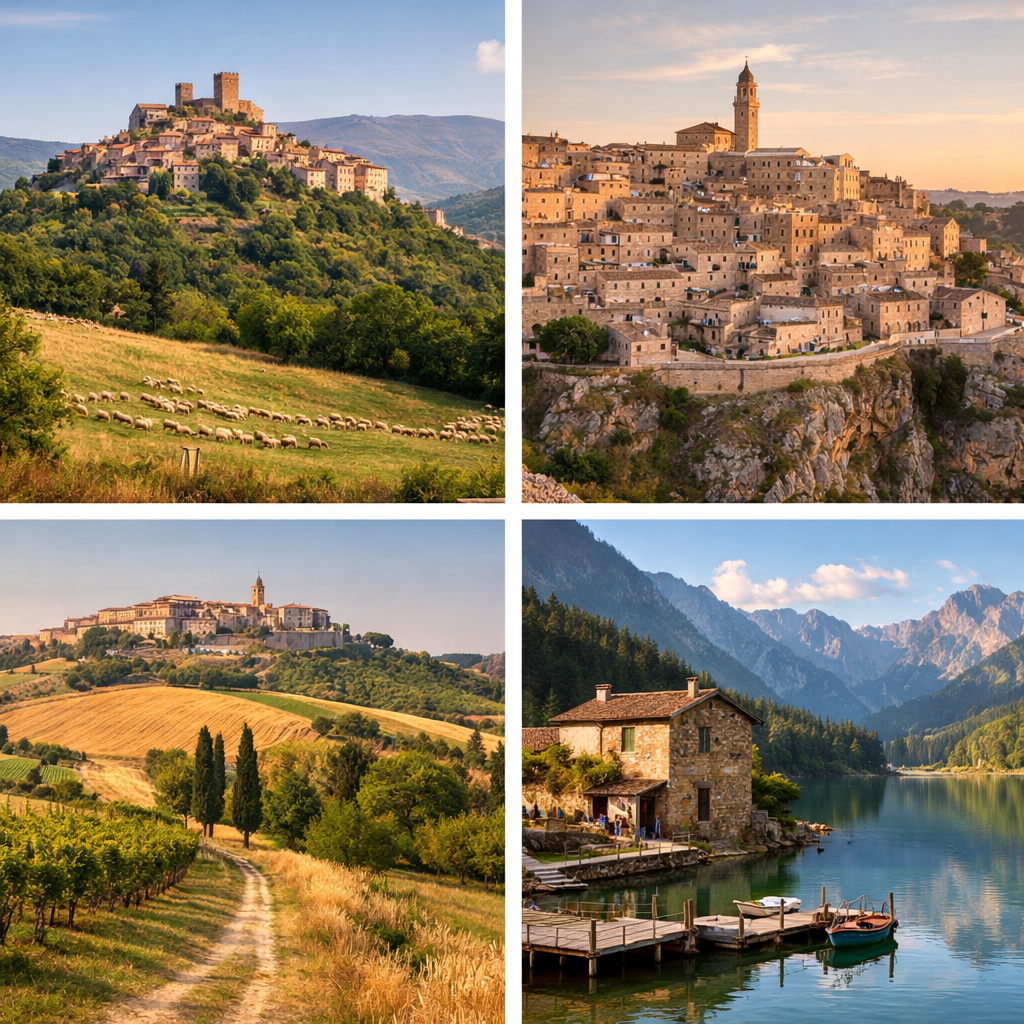
When the familiar is no longer enough
Many trips to Italy start the same way. Rome, Florence and Venice are considered obvious stops. They shape the image of the country, conveying history, art and architecture in concentrated form. For first‑time visitors they are overwhelming, for return travellers familiar. But at some point, a quiet sobering sets in — not because these places lose their importance, but because they no longer surprise.
Those who have travelled Italy several times no longer seek confirmation of what is already known. Instead, they desire depth. Places that don’t immediately reveal themselves. Experiences that can’t be reproduced. It is exactly at this point that a different kind of travel begins.
This article is aimed at people who know Italy — and still want to rediscover it.
The change of perspective of experienced travellers to Italy
With growing travel experience the view changes. The focus shifts from sights to contexts, from highlights to transitions. Return travellers observe more closely, compare more consciously and question more quickly. They notice how differently regions function, how strongly local identities are expressed, and how much everyday life and landscape are intertwined. Instead of programmes, they are interested in processes. Instead of attractions, they are interested in routines. They stay longer in one place, take the same routes several times, and begin to recognise patterns.
This shift in perspective inevitably leads away from the well‑known centres. Not out of rejection, but out of curiosity.
Why Italy is much more than its icons
Italy is not a country that can be reduced to a few cities. Its history is fragmented, its development shaped regionally. Political unity is young, cultural diversity ancient. If you focus only on the well‑known cities, you experience Italy in condensed form — but not in its breadth.
Away from the big names lies an Italy that explains less but tells more. Places that don’t have to satisfy expectations. Regions that are not competing for attention. These spaces are interesting to return travellers because they aren’t immediately readable.
Regions that open to experienced travellers
Molise is one such region. It lies between better‑known neighbours and is often overlooked. Yet it offers a mix of mountains, hills and coast that is unusually balanced. The towns are small, the landscape vast, the rhythm slow. Here Italy is not staged. Encounters happen casually; conversations develop without a goal.
Le Marche is often described as an alternative to Tuscany, but this comparison falls short. There are similar landscapes, but the atmosphere is different. Less self‑confidence, fewer expectations, more restraint. Historic towns, rural spaces and the Adriatic coast lie close together without competing. For return travellers the region offers exactly what they seek: variety without overwhelm.
Basilicata initially seems off‑putting to many travellers. The landscape is rugged, the villages appear closed, the infrastructure restrained. Yet those who stay quickly recognise this region’s strength. It forces slowness. Vastness, silence and archaic structures create a space in which time takes on a different meaning.
Friuli‑Venezia Giulia especially appeals to those who appreciate cultural transitions. Proximity to Slovenia and Austria shapes architecture, cuisine and mentality. Here an Italy emerges that cannot be clearly placed. For return travellers this is attractive because it combines familiar elements with unfamiliar perspectives.
Finally, Calabria reveals its true quality away from the well‑known coastal stretches. In the hinterland lie mountain villages whose everyday life is barely touched by tourism. The roads are longer, structures simpler, encounters more direct. Those who bring patience are rewarded with an intense insight into regional ways of life.
What return travellers really seek
Experienced travellers to Italy usually have similar expectations. They no longer want to see more, but to understand. Not to collect, but to remain. From this arise clear needs:
- longer stays in a few places
• closeness to everyday life instead of distance created by tourist infrastructure
• accommodation that enables independence
This form of travel is less spectacular, but more sustainable. It changes not only the view of Italy, but also of one’s own travel behaviour.
The role of the holiday home in the changed travel understanding
For return travellers, accommodation is no longer a secondary aspect. It becomes the central element of the journey. A holiday home offers not only space, but freedom. It allows you to structure the day yourself, use local markets, develop your own rituals. Especially in regions away from tourist centres, the holiday home is often the only way to truly be there. Hotels are missing or highly standardised. Holiday homes, on the other hand, fit into existing structures. They make it possible to become part of the environment without disturbing it.
Many return travellers report that they only really understood Italy when they were no longer constantly on the move. When they stayed, shopped, cooked, came back.
Rediscovering Italy means slowing down
Perhaps the most important difference between first‑time and repeat travel is tempo. Those who know Italy are no longer in a hurry. They know that impressions need time. That conversations develop. That places only open on the second or third visit. This slowness is not a sacrifice, but a gain. It creates space for observation, for nuances, for moods. It makes it possible to experience Italy not as a destination, but as a process. Return travellers do not travel to achieve something. They travel to be.
Beyond recommendations and rankings
Another characteristic of experienced travellers is their independence from recommendations. They follow lists and rankings less, but their own interests more. They accept uncertainty, detours and dead time as part of the experience. Especially in Italy this attitude is crucial. Many of the most interesting places do not unfold through information, but through presence. You must be there to understand why a place works.
Conclusion: Italy deepens with every journey
Italy is not a country that you complete. With every return, not only the view of the country changes, but also of one’s own travel. Away from the well‑known names lies an Italy that impresses more quietly, more complexly and more sustainably. For return travellers Italy becomes less a destination and more a relationship. A relationship that needs time, demands attention and offers depth in return.
Those who take this step do not discover a new Italy — but a different one.