
When is the cheapest time to visit Italy? The price guide for your holiday home break
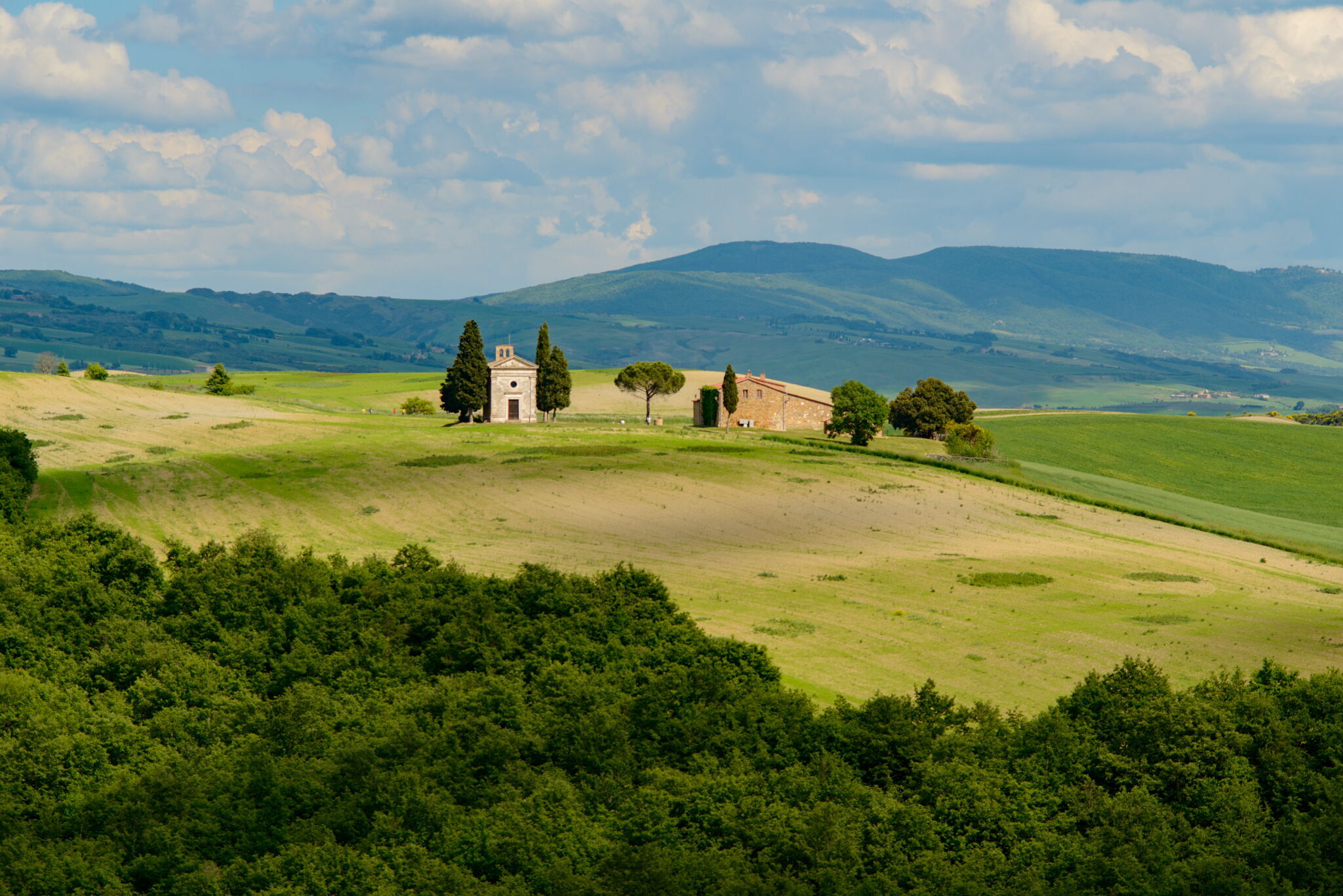
First, the short answer, because that’s what most people are really interested in: you’ll usually find the best deals on holiday homes in Italy between November and March. There’s also a second booking window, which is even more attractive for most travellers: May, the first half of June, September and October. July and August, on the other hand, are peak season in almost every traditional holiday region – especially around Ferragosto, 15 August, when the whole of Italy is on the move at the same time.
But that doesn’t really answer the question. After all, ‘cheap’ depends not only on the calendar, but just as much on where you want to go. A country house in Tuscany, a flat in Rome and a beach house in Puglia follow completely different price trends. That’s exactly what this article is about: not the single cheapest month, but the right combination of region, travel time and type of accommodation.
Why there is no such thing as ‘the one’ cheapest month
Imagine two travellers. One books a house with a pool on Lake Garda for the last week of July. The other is looking for a city flat in Rome in February. Both ask: ‘When is Italy cheapest?’ – and inevitably get different answers, because their destination regions barely overlap.
A look at the national figures nevertheless shows how unevenly demand is spread throughout the year: in 2024, around a quarter of all international overnight stays in Italy took place in July and August alone. In the third quarter of 2025, the country recorded around 85.2 million overnight stays in August – by September, the figure had already dropped significantly to 52.4 million. These figures explain why prices and availability change so rapidly in late summer: as soon as the extended school holidays end, demand drops noticeably, and with it, holiday home prices in many places also fall.
For you as a traveller, this means one thing above all: before you look for the ‘cheapest month’, it’s worth asking yourself which is the ‘right month for your region’.
The Italy Price Calendar: January to December
January is one of the cheapest months of the whole year, provided you’re not travelling to a ski resort. Occupancy rates are low, and prices range from very low to medium. In the south – in Sicily, Apulia, Rome or Naples – daytime temperatures of 12 to 16 degrees are realistic; in the north, however, it remains cold. The catch: swimming pools and seasonal restaurants are closed in many holiday regions, which is why this month is better suited to city breaks and winter holidays than to a traditional country cottage.
February remains similarly attractive in terms of price – low to medium – with low to medium occupancy rates. Temperatures are like those in January, but in the south it is already noticeably milder. Sicily, Apulia, Lazio and the major cities are good destinations. Bear in mind the carnival and the school ski holidays: both can make certain dates and locations significantly more expensive, even though the month remains quiet overall.
March remains in the low to medium price range, with low to medium occupancy rates. In the south, daytime temperatures of 14 to 18 degrees are possible; good regions remain Sicily, Apulia, Rome and, increasingly, Tuscany too. The major exception is Easter: if the holiday falls in March, demand and prices often rise noticeably – this effect should always be considered separately.
April sees prices rise to a medium level with medium to high occupancy rates. With temperatures of 16 to 21 degrees, it is a very pleasant month for Tuscany, Umbria, the Marche and Liguria. The downside: Easter, spring holidays and long weekends drive prices up particularly frequently this month, so it is worth checking the calendar before booking.
May remains in the mid-range price category, though with only moderate occupancy – one of the best combinations of the whole year. With temperatures of 20 to 25 degrees, Tuscany, Umbria, Apulia and Sicily are particularly appealing. For country houses with a garden or pool, May is one of the strongest months of the year, without demand having yet reached summer levels.
June is a mixed bag: price levels rise to medium to high, whilst overall occupancy is already high, with temperatures frequently ranging from 25 to 30 degrees. Tuscany, the lakes of northern Italy, Apulia and Sardinia are in high demand. Important to note when booking prices often remain lower until around mid-June, after which they rise noticeably – particularly for properties with swimming pools and those on the coast.
July is the peak season for holiday homes: high prices, very high occupancy rates, and temperatures between 28 and 33 degrees. Those who have to travel this month are most likely to find some leeway on prices in higher-altitude regions such as the mountains. For coastal and lakeside properties, the rule is: book early, as good properties sell out quickly.
August marks the annual peak: very high prices, very high occupancy rates, and temperatures frequently above 30 degrees. Only in higher-altitude areas do prices remain reasonably moderate. The main driver is Ferragosto around 15 August, when prices and occupancy rates reach their peak nationwide.
September sees prices ease back to medium to high, with medium to high occupancy rates and pleasant temperatures of 23 to 28 degrees. Apulia, Sicily, Tuscany and Lake Garda are among the best destinations. The first half of the month can still be expensive in popular locations, but after that the value for money usually improves significantly.
October drops back too low to medium levels, with equally low to medium occupancy rates, at 15 to 20 degrees. Tuscany, Umbria and Piedmont are excellent for grape harvesting and hiking, though there’s no longer any guarantee of being able to swim here. For those seeking a leisurely holiday, the month is nevertheless one of the most attractive of the whole year.
November is one of the cheapest months of all, with very low prices and low occupancy rates. It gets chilly, though it remains milder in the south. Sicily, Apulia, Rome and Naples are good destinations – but check beforehand whether swimming pools and restaurants in your chosen location are still open.
December is a mixed bag: prices range from low to high, occupancy is low outside the public holidays, and it’s wintry in the north. Cities, as well as Sicily and Apulia, are good choices. The month remains generally affordable until just before Christmas, after which the Christmas holidays and New Year’s Eve noticeably turn the pricing landscape on its head.
The low season: November to March
During these months, you’ll find the lowest prices and the widest choice – provided you avoid ski resorts and public holiday weeks. If you’re looking for sunshine rather than rain at this time of year, you’re better off in Sicily, Apulia or Calabria than in a country house in Tuscany or on Lake Garda.
By way of comparison: in Florence, the average January temperature is around 6.7 °C, with daily highs of around 11 °C. Palermo, on the other hand, averages around 12.5 °C in January. Winter in Italy is therefore less about budget beach holidays and more about exploring cities, enjoying the cuisine and visiting the south.
March is an exception, particularly when Easter falls during that month – demand and prices often rise noticeably then, even in otherwise quiet regions.
The outstanding value for money: May, June, September, October
If you’re only going to take one piece of advice from this article, let it be this: May, the first half of June and the second half of September through to October usually offer the best balance of weather, open facilities and moderate demand. The countryside is green or ready for harvest, restaurants and attractions are open, and properties with a pool or garden can be enjoyed to the full without prices reaching summer levels.
June, however, warrants closer consideration. In the second quarter of 2025, it was by far the busiest travel month, accounting for 46.3 per cent of all overnight stays for the quarter – though this demand is not evenly distributed. The first half of June often remains moderate, after which prices rise significantly, particularly on the coast, by lakes and for properties with swimming pools. The rule of thumb: don’t book ‘June’ as a blanket term but specifically target the period up to the middle of the month.
The high season: July and August
On beaches, lakes and islands, August remains the most expensive and in-demand period almost everywhere. In August 2025 alone, Italy recorded 19.1 million arrivals and 85.2 million overnight stays – significantly more than the already busy September, which saw 14.8 million arrivals. Around Ferragosto, many Italians also travel themselves, which further exacerbates traffic, occupancy rates and prices. Anyone who must travel during this period has little choice but to book early; those who are flexible should seriously consider switching to June or September.
Putting temperatures into perspective
It would be misleading to summarise Italy’s climate with a single figure. A more realistic approach is to divide the country into three regions:
- Northern Italy/inland: Milan has a daily maximum of around 6 °C in January and around 30 °C in high summer. In winter, cities, spas and ski resorts are particularly suitable here; in summer, lakes and mountains.
- Central Italy/Tuscany: Florence averages around 11 °C in January, but 32 to 33 °C in July and August. The best all-round time is usually between April and June, and between September and October.
- Southern Italy/Sicily: Palermo remains mild in January at around 12.5 °C and averages around 27 °C in August. The south therefore has a clear advantage when it comes to winter sun, whilst in the height of summer it really comes into its own for classic beach holidays.
Important to bear in mind: these are long-term climate averages, not weather forecasts – fluctuations from year to year are normal.
Five practical tips to help you really save money on your holiday home
- Factor in the additional costs. Final cleaning, bed linen, electricity or heating, pool heating, a security deposit, visitor’s tax, travel costs and tolls can quickly eat into what appears to be a cheaper weekly rate. Here’s an example to illustrate this: a house costing 1,200 euros initially seems more attractive than one on offer for 1,450 euros. However, if you add 180 euros for final cleaning, 120 euros for heating costs, 80 euros for a linen pack and 70 euros in tourist tax, the actual total price comes to 1,650 euros – higher than the supposedly more expensive offer.
- Book early where it’s worth it – stay flexible where possible. For summer holidays, coastal regions, islands and more spacious houses with a pool, booking early almost always makes sense. In the off-season, in rural areas and in towns, on the other hand, you can often plan at shorter notice without compromising on choice or price.
- Check alternative arrival and departure days. Many properties are designed around the traditional Saturday-to-Saturday cycle. Where providers are more flexible, arriving on a Sunday, Monday or Thursday can work out cheaper.
- Make a point of avoiding the well-known price drivers. These include the Easter holidays and weekend, Whitsun and long weekends, the weeks around Ferragosto, the summer holidays in several European countries, Christmas and New Year’s Eve, as well as the February skiing holidays. Local events such as the Palio di Siena or major grape harvest weekends in Tuscany and Piedmont also have a noticeable impact on individual regions.
- Think in terms of accommodation types, not just months. A country house in central Italy follows a different pricing curve to a city flat. Cities generally have more consistent occupancy rates than traditional holiday destinations: for Rome, the average occupancy rate is around 64 per cent, and for Milan around 59 per cent. Both figures are much more evenly distributed throughout the year than for a beach house, which is practically fully booked in August and almost empty in January.
Frequently Asked Questions
When is the cheapest time to book a holiday home in Italy?
Usually outside school holidays, particularly between November and March. For pleasant weather at moderate prices, May, the first half of June, September and October are considered prime periods. July and August are the most expensive months in most holiday regions.
Is Italy cheaper in September than in August?
Yes. After the extended summer holidays, demand drops significantly in many places, whilst temperatures and the sea often remain summery. However, the first half of September can still be quite pricey in popular coastal resorts.
When is Tuscany cheapest?
For a holiday home in Tuscany, November to March are usually the cheapest months. If you’re looking for ideal weather for day trips and a garden or pool you can use, May, the first half of June, September or October are usually a better bet than the height of summer.
When is Sicily cheapest?
In winter and early spring, Sicily is often cheaper than in summer. March to May, as well as October and November, are ideal for culture, nature and a mild climate. For a budget-friendly beach holiday, June, as well as September and October, are often a wider choice than July and August.
Is a holiday home in Italy a good idea in winter?
Yes, provided the accommodation and region are a good match – for example, a winter-proof house with heating in a town or in southern Italy. With country houses featuring a pool, you should bear in mind that outdoor pools are usually closed in winter and seasonal offers may be limited.
Which weeks should I avoid if I want to save money?
Easter, Whitsun and long weekends are usually particularly expensive, as are the weeks around Ferragosto, the European summer holidays, Christmas and New Year’s Eve, and the skiing holidays in February. Regional festivals and major events can also make prices in certain places noticeably higher.
Conclusion: Consider region, season and accommodation together
There is no single, simple answer to the question of the cheapest month to visit Italy – and that is precisely the most useful insight. If you want to save money, you shouldn’t just fixate on a specific calendar month, but ask three questions at once: Which region suits my travel plans? Which season is best for that region? And how does the type of accommodation affect the cost? With this combination of calendar knowledge and regional insight, you’ll not only find an affordable holiday in Italy, but above all one that’s just right for you.