
- Apulia In October: Swimming, Harvest And Mild Light – Your Holiday Home Guide For The Off-season
- How To Live In Italy For Three Months – Without Looking Like A Tourist
Italy's secret national parks – where nature and history meet!
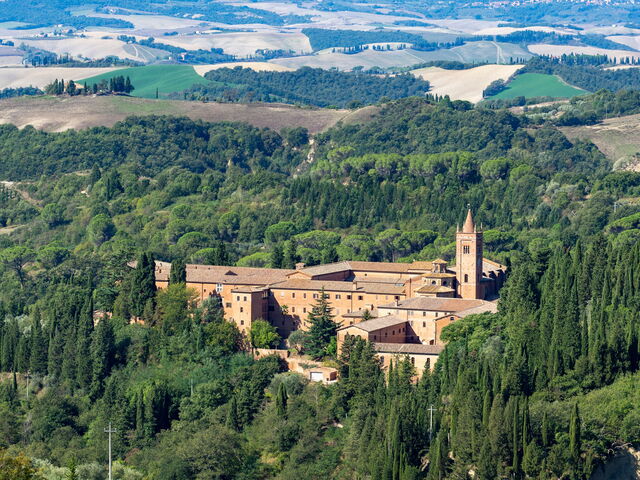
When you think of Italy, you often picture coastlines, cities of art, and cappuccino under arcades. But beyond the beaten track, another Italy unfolds – one full of tranquillity, depth, and natural beauty. The country's national parks show how closely nature and history are intertwined.
Here, where centuries-old paths lead through ancient forests, where villages cling to cliffs and monasteries lie hidden among pine trees, you will find the real Italy: raw, quiet and wonderfully unspoilt.
More than nature – Italy's national parks as a living heritage
Italy has 25 national parks, spread across the country – from the high mountains of the Alps to the islands of the Mediterranean. Each of them tells a different story: of Romans and monks, of farmers and mountaineers, of myths and modern sustainability.
While most travellers stop in Rome or on the Amalfi Coast, the national parks still offer something that has become rare in Italy: solitude and authenticity.
Gran Sasso and Monti della Laga National Park – The roof of central Italy
In the middle of Italy, the Gran Sasso d'Italia rises like a natural cathedral. Rugged peaks, vast plateaus, and tiny mountain villages form a backdrop reminiscent of Tibet – which is why locals affectionately call the plateau Piccolo Tibet.
Here, you can hike for days without encountering a soul. Eagles circle above the landscape, sheep graze leisurely and snow glistens in the distance, even in May. But the Gran Sasso is more than just nature: partisans once hid in its valleys during the Second World War, and the rocks bear traces of medieval monastery paths.
Tip: Climb the Rifugio Duca degli Abruzzi early in the morning – the sunrise over the Abruzzo is unforgettable.
Parco Nazionale del Cilento e Vallo di Diano – between temples and olive groves
South of Naples lies a part of Italy that hardly anyone knows: the Cilento National Park, a UNESCO World Heritage Site, and one of the most diverse regions in the country. Hidden among olive groves, mountains, and coastlines are Greek temples, Byzantine caves, and villages where time seems to stand still.
The landscape tells stories: of Magna Graecia, of fishermen who work according to ancient methods, and of monks who once made pilgrimages through these valleys.
Hikes lead from the ancient temples of Paestum up to Monte Cervati, the highest peak in Campania – accompanied by the scent of myrtle and the sea.
Historical highlights in Cilento: culture between mountains and sea
The Cilento National Park is not only scenically impressive, but also rich in historical sites. One of the most important is Paestum, one of the best-preserved Greek temple cities in Europe – its Doric columns date back to the 6th century BC. Inland lies the impressive Certosa di Padula, a Baroque monastery with magnificent courtyards and quiet cloisters – a masterpiece of sacred architecture. And on the coast sits Castellabate, a medieval village overlooking the sea, which is not only historically fascinating, but also serves as a backdrop for the Italian way of life. Together, these places tell the millennia-old story of a region where nature and culture are inextricably linked.
Parco Nazionale delle Foreste Casentinesi – Italy's quiet heart:
Between Tuscany and Emilia-Romagna, lie dense forests that are among the oldest in Europe. The Casentino National Park is a place of tranquillity, criss-crossed by springs, gorges, and ancient beech trees.
This is where Francis of Assisi lived and prayed, and where the remote Camaldoli Monastery, which has been welcoming pilgrims for over 1,000 years, stands. Between the mist and the ringing of bells, you feel transported to another time.
Nature here is almost mystical: deer, wolves and lynxes roam the thickets, while rays of sunlight break through the treetops in golden swathes.
Tip: If you are looking for peace and quiet, come in autumn – when the leaves are ablaze with shades of red and gold.
Parco Nazionale dell'Aspromonte – Calabria's wild south
At the southernmost tip of Italy, where the mainland meets the sea, rises the Aspromonte – a rugged, archaic mountain range. Here, Italy is still wild, unspoilt and authentic. Narrow roads wind through chestnut forests and small mountain villages, where ancient Greek – Griko – is still spoken today. Between rocks and waterfalls lie traces of past civilisations: Byzantine caves, Norman castles, abandoned settlements.
In the National Park, you will find places like Roghudi Vecchio, a ghost village that seems to cling to the mountainside, and the imposing Cascate di Maesano, a cascade of three waterfalls.
Insider tips in Aspromonte: wilderness meets history
The Aspromonte National Park in southern Calabria impresses not only with its unspoilt nature, but also with its hidden cultural treasures. Roghudi Vecchio, an abandoned ghost village spectacularly nestled against the rocks, is particularly impressive – accessible only on foot, and full of atmosphere. Another natural wonder is the Cascate di Maesano, three waterfalls one above the other in the middle of a dense forest, which turn into a roaring spectacle after rainfall. Those who want to reach new heights should climb Montalto, Calabria's highest peak at 1,956 metres – the view stretches all the way to the coast of Sicily. These places make Aspromonte a region full of wild beauty and quiet stories.
Parco Nazionale dell’Arcipelago Toscano – Island dreams steeped in history
Between sky and sea lies Europe's largest marine national park: the Tuscan Archipelago. Seven islands – each different, each fascinating.
The best known, Elba, is more than just Napoleon's place of exile. Here, crystal-clear waters, pine forests and quiet bays meet traces of centuries past.
The smaller islands of Giglio, Capraia and Montecristo are nature reserves – sparsely populated, difficult to reach, but breathtakingly beautiful. Peregrine falcons nest here, and dolphins accompany the ferries that shuttle between the islands.
Tip: In spring, the macchia blooms in all colours – a paradise for hikers and photographers alike.
Sustainable travel – in harmony with nature and people
When you visit Italy's national parks, you are entering sensitive ecosystems. Respect for nature is therefore a matter of course: stay on marked trails, eat regional food, and choose local accommodation.
Sustainable travel: How to travel in harmony with nature and people:
Visitors to Italy's national parks can make an important contribution to sustainable travel by making simple choices. A stay in agriturismo – family-run rural accommodation that combines authentic living with regional cuisine, while strengthening the local economy – is particularly rewarding. Travelling by public transport is not only environmentally friendly but also allows you to explore the region in a relaxed and inexpensive way. And if you choose local guides, you will not only gain deeper insights into nature and history, but also directly support the knowledge and work of the local people. This makes sustainable travel a real added value – for guests and hosts alike.
Best time to travel spring and autumn – pleasant climate, empty hiking trails, and intense light for photography.
Conclusion: Where nature tells stories:
Italy's national parks are more than just protected areas – they are stories told by stone, water, and wind. They combine centuries of culture with the untamed power of nature. When you hike here, you hear not only the rustling of leaves, but also the echoes of times gone by. Every path leads to new perspectives – and sometimes, to yourself.