
Northern Tuscany or Southern Tuscany? Which half suits your holiday best?
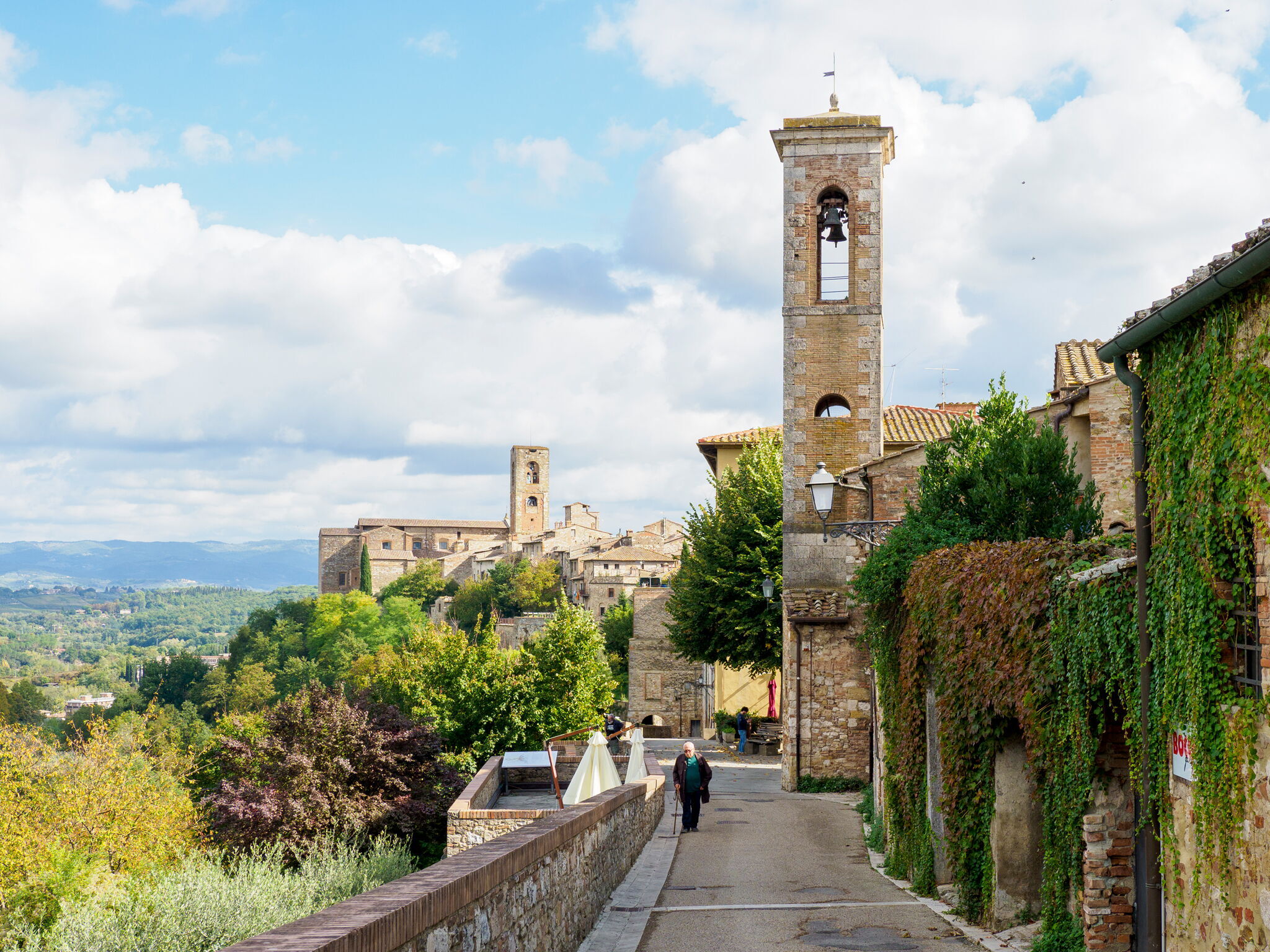
“Is the north or the south of Tuscany more beautiful?” I can’t help but smile briefly every time I hear this question, because it’s impossible to answer – not because I don’t want to commit to a choice, but because “Northern Tuscany” and “Southern Tuscany” aren’t official, standardised tourist regions at all. They’re practical guides that we, as travellers, have come up with ourselves to make sense of a vast, diverse region. Tuscany itself is made up of distinct areas, each with its own character: Versilia, the Pisa area, the Garfagnana, Chianti, the Val d’Orcia and the southern Maremma. Each of these is a holiday destination.
That’s why I’d suggest you rephrase the question: not ‘north or south’, but ‘What do I want most of my holiday to be like?’ Beach with day trips, mountain scenery, wine country, or the sea and a nature reserve? Once you’ve answered that for yourself, the decision almost falls into place.
What particularly fascinates me about this topic is how often guests arrive with a preconceived notion – “We want to go to the south, it’s quieter there” – and how often, on closer inspection, that opinion doesn’t hold water. Peace and quiet, heat, beach quality: these are all matters of the specific micro-location, not the direction of the compass. That’s precisely why it’s worth taking a slightly closer look before you decide on one side of Tuscany or the other.
The regions clearly defined
In this article, I include Versilia, the area around Pisa and Lucca, and the Garfagnana with the middle Serchio Valley as part of Northern Tuscany. I include the Maremma, the Argentario and the southern Grosseto area, including the Val d’Orcia, as part of Southern Tuscany. In between, both geographically and in terms of character, lies Chianti.
What surprises many people: ‘Northern Tuscany’ by no means automatically means ‘the sea’. Versilia combines around twenty kilometres of coastline with hilly countryside and the Apuan Alps in the background – you can lie on the beach in the morning and go hiking in the mountains in the afternoon. The Pisa area encompasses not only the famous city with its Leaning Tower, but also beaches such as Marina di Pisa and Tirrenia, as well as rural villages in between. The Garfagnana is a region of nothing but mountains and forests between the Apuan Alps and the Apennines, where you won’t see a beach for days on end – and that’s exactly as it should be.
In the south, the Maremma describes itself as a blend of Mediterranean landscape, sea, nature park, wine-growing villages and thermal spas – a region that deliberately draws its identity from this mix. The Val d’Orcia, on the other hand, is a UNESCO cultural landscape featuring towns such as Pienza, Montalcino and Bagno Vignoni, where wine and the landscape are almost inextricably intertwined.
Chianti – the distinct centre
Before we delve deeper into the comparison, I’d like to pre-empt a point that is important to me. If, when you think of ‘typical Tuscany’, you picture wine, villages and day trips to individual towns, then the north-south question may not be the right one for you. Chianti lies between Florence and Siena and cannot be clearly classified as either northern or southern. It is a landscape of rolling hills, viticulture and village life in its purest form – without the sea, but with a wealth of culture. After all, this region also has Morellino wine and the Saturnia area to offer – both of which are unrivalled. If that’s what you’re primarily looking for, you should treat Chianti as a distinct third option, rather than mentally squeezing it into one of the two halves.
A comparison of the beaches
If a well-planned, well-equipped day at the beach is important to you, your path will likely lead your north. Versilia and the Pisa area offer wide sandy beaches and numerous well-equipped beach resorts – sun loungers, shade, and an ice cream within walking distance. This is a beach holiday with all the comforts, where you must worry about very little yourself.
The Maremma in the south is a different story: here you’ll find sandy beaches alternating with pine forests, and more unspoilt stretches that feel less over-organised. The Argentario adds yet another unique touch, with partly rockier coves that call for more of a spirit of discovery than simply a stroll from the car park to a sun lounger. So, which is ‘better’ really depends on what sort of beach day you have in mind – the organised one with facilities, or the wilder one surrounded by more nature.
Landscape and temperatures – a formula that doesn’t add up
I’d like to take this opportunity to dispel a persistent myth: ‘North is cool, south is hot’ simply isn’t true. Let’s look at three specific places: in Pisa, the average daily maximum in July is around 29.9 degrees, and in August 30.2 degrees. In Grosseto, in the heart of the Maremma, it’s around 31.4 degrees in July and 31.7 degrees in August. And in Florence, which belongs to north-central Tuscany, the average climbs to 32.3 degrees in July and 32.6 degrees in August – making Florence hotter than the coastal towns in the south.
These figures relate to individual locations, not entire regions, and they do not predict conditions for a specific summer – but they clearly show that neither ‘it’s always pleasant by the sea’ nor ‘it’s automatically cooler in the north’ can be upheld as a generalisation. For you as a holiday home guest, factors such as cooling in the bedroom, shade on the terrace, altitude and distance from a sweltering city are often far more decisive. This is often more important than whether you are in the north or the south. Anyone who really wants to escape the heat will find a distinct, cooler microclimate in the higher-altitude Garfagnana – regardless of what the compass direction might suggest.
Excursions, food and wine
The north plays to its strengths with a combination of art cities and the coast: Pisa, Lucca, the area around the San Rossore Nature Park and, for those who fancy it, a detour to the Garfagnana for a completely different day filled with chestnut forests instead of sandy beaches. Culinary-wise, the seafood cuisine of Versilia dominates here, whilst in the Garfagnana spelt dishes and chestnut products set the tone – a side of Tuscany that, at first glance, has little to do with brands such as Chianti wine.
The south, on the other hand, boasts the Maremma Park, day trips to Orbetello or the Argentario, villages and thermal spas, and of course the Val d’Orcia, including Pienza and Montalcino. Here, the menu features fish and the rustic cuisine of the Maremma, accompanied by Morellino di Scansano as the local wine, whilst the Val d’Orcia spoils visitors with its own wines and regional produce.
There’s no clear winner here – just two contrasting culinary focuses, both of which have their merits.
I’d even advise you to make food and wine a key consideration right at the start of your decision-making process, rather than leaving it until the end. Anyone planning a holiday centred around long dinners, wine tastings and visits to markets will be happier in Val d’Orcia or Chianti than on a bustling seafront promenade. Conversely, someone who wants fresh fish every evening with a sea view is more likely to find what they’re looking for in Versilia or on the Maremma coast than in the hinterland.
Which region suits whom?
If you’re travelling with young children and want to go to the beach every day, look first at Versilia or family-friendly stretches in the Pisa area; if you’re looking for more natural beaches, consider Marina di Grosseto and Principina a Mare in the south. The key factors here are always the actual beach access, parking, shade and the distance from your holiday home – not the name of the region.
If you’re travelling as a couple and want to combine Pisa, Lucca, swimming and excellent food, northern Tuscany is the obvious choice. A base in the Pisa area or on the Versilia coast is ideal for splitting your time between cultural excursions and days at the beach. If, on the other hand, you want to experience Tuscany without the classic postcard attractions, there’s no getting away from the Garfagnana: Chestnut forests, mountain villages and hiking trails between the Apuan Alps and the Apennines define your stay here, offering a unique, quieter side of Tuscany.
For families or couples. After all, this region also has Morellino wine and the Saturnia area to offer. If you’d like to combine the beach, cycling and a nature park, the southern Maremma is well worth a look. The Maremma Park, Alberese and the coastline there offer a completely different kind of holiday week to a classic beach holiday in Versilia. And if you’re more of a leisure traveller, with a penchant for villages, wine and thermal spas, then compare the Val d’Orcia with the southern hinterland of the Maremma. After all, the Maremma also offers Morellino wine and the Saturnia area. If, on the other hand, you’re mainly after wine and villages without the sea, bear in mind: Chianti is a distinct option that you should consider separately.
One final, very practical piece of advice if your time is limited: don’t try to cram both halves of Tuscany into a single week. A base in the north or south will give you a more authentic holiday experience and fewer days spent travelling than an itinerary that tries to take in everything at once. This isn’t a scientifically proven travel rule, but simply my experience from countless conversations with guests who, in hindsight, have admitted that they spent more time in the car than at their holiday destination.
Accessibility and price levels are assessed honestly
The north is relatively easy to reach via Pisa Airport, the railway and well-developed roads. This makes it particularly convenient if you want to combine city and coast without having to drive long distances every day. In the south, however, with its scattered country houses and unspoilt coastlines, having your own transport is often essential. You should therefore check the exact location of your chosen property very carefully and, if in doubt, make sure to book a hire car rather than relying on a spontaneous trip without one.
When it comes to price levels, I’m deliberately avoiding making any sweeping generalisations. Places like Forte dei Marmi in the north represent a decidedly high-end coastal segment, but there are also more affordable locations and types of accommodation there. In the south, the Argentario and prestigious locations in the Val d’Orcia can be just as expensive, whilst the rest of the inland areas vary considerably.
It’s simply not possible to make a reliable statement such as ‘the north is more expensive’ or ‘the south is cheaper’ without a genuine, comparable look at our own portfolio. That’s why I’m deliberately avoiding giving a figure here that might ultimately not match your specific holiday home.
Frequently asked questions about northern and southern Tuscany
Where are the more beautiful beaches – Northern or Southern Tuscany?
If you’re looking for wide, well-developed sandy beaches with beach resorts, the Versilia and the Pisa area are the places to go; if you prefer pine forests, more natural stretches and varied coves, you’re more likely to find them in the Maremma and on the Argentario. Which is ‘better’ depends entirely on your ideal day at the beach.
Is southern Tuscany warmer than northern Tuscany?
Not generally speaking. Looking at specific locations, the average daily maximum temperature in August was 31.7 degrees in Grosseto and 30.2 degrees in Pisa. Altitude, proximity to the sea and the specific year often play a decisive role in this difference.
Where in Tuscany is best for families with children?
Both parts offer family-friendly beaches, such as Versilia and Tirrenia in the north, or Marina di Grosseto and Principina a Mare in the south. The specific location of your accommodation and access to the beach are the key factors.
Is the Garfagnana suitable for a beach holiday?
No, its main attractions are the mountains, forests and villages, not daily trips to the beach. It is particularly well suited to nature and walking holidays away from the coast.
Is Chianti part of northern or southern Tuscany?
Neither, strictly speaking – the Chianti hills lie between Florence and Siena and form a distinct central region.
Which is cheaper, northern or southern Tuscany?
It’s impossible to give a reliable, general answer without knowing the specific travel dates and holiday homes in question. There are high-priced locations on both sides, and the rest of the options vary greatly.
Conclusion
The most honest answer to ‘north or south’ is this: Versilia, Garfagnana and the Pisa area offer you three varied holidays in northern Tuscany, whilst the Maremma and Val d’Orcia offer two equally diverse holidays in southern Tuscany. The best choice isn’t determined by the direction, but by your preferred daily routine. If you answer this question honestly – beach with comfort, wild nature, hill walking, wine and villages, or the sea and a nature reserve – you’ll find your ideal holiday home much faster than any north-south debate ever could.
And if you’re still unsure in the end: that’s perfectly normal; Tuscany is simply too diverse to be pigeonholed. Take the time to roughly run through your ideal itinerary for a typical week’s holiday before you book. This will usually lead you to the right holiday home more quickly than looking at any other region.