
- Holiday Homes And Cycling Road And Gravel Cycling Hotspots Right On Your Doorstep
- Exploring The Local Area With The Vespa Guide: Short Trips From Your Holiday Home
A light language holiday: How to learn more Italian in a two-week stay than on a course
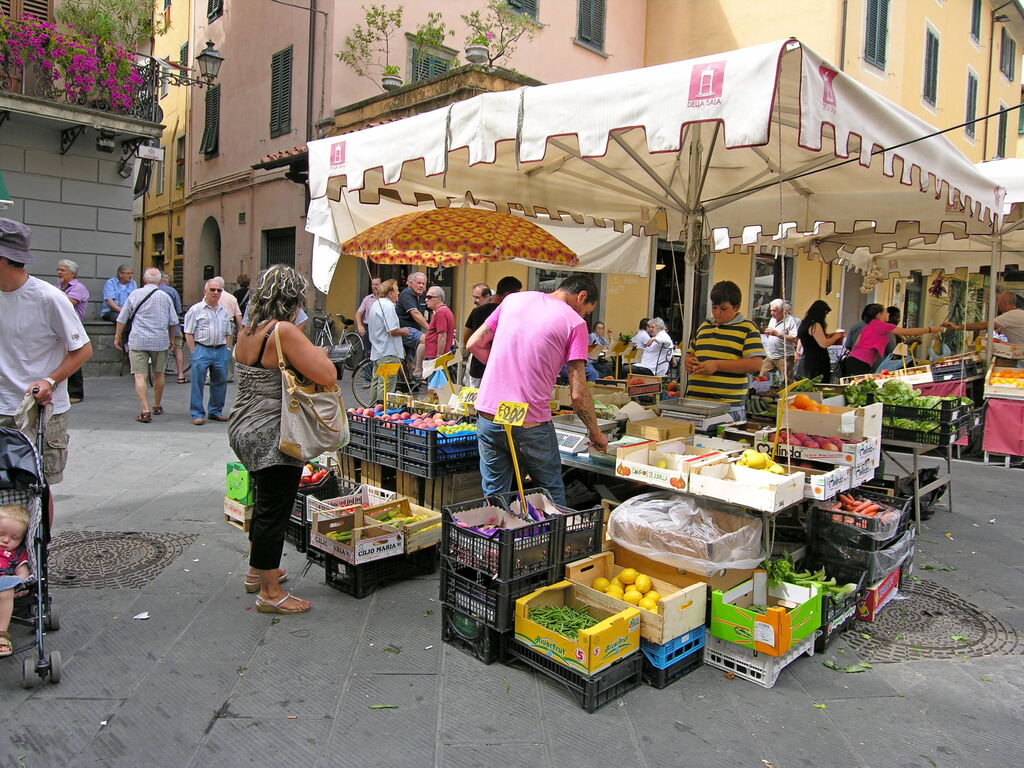
There are holidays from which you bring home lovely photos. And there are holidays from which you suddenly find yourself able to speak in full sentences that would never have crossed your lips before. That is precisely the appeal of learning Italian on holiday. Not as a strict study programme, not as a school desk with a sea view, but as language practice that slips quite naturally into your day.
A holiday home is surprisingly effective for this. It doesn’t force you into a timetable, but it puts you in exactly the situations where language comes to life: when checking in, at the market, in a bar, chatting with neighbours, asking for directions, or when ordering, asking questions and understanding. Research into stays abroad has shown for years that such stays can promote language development – particularly in terms of oral fluency, everyday communication and pragmatic language use. At the same time, the effect is not automatic. The intensity, quality and frequency of contact are crucial.
The good news is you don’t need to book a traditional language study trip to achieve this. A language holiday in a holiday home can be surprisingly effective if you use it wisely. Not because you’ll suddenly jump a whole CEFR level in two weeks – the time frame is usually too short for that. Cambridge gives a rough guideline of around 200 Guided Learning Hours per CEFR level. But two weeks are certainly enough to overcome inhibitions, sharpen listening comprehension, activate everyday vocabulary and finally turn passive Italian into usable Italian.
Why two weeks on location are often more effective than a standard daily course
A traditional language course has clear advantages: structure, correction, grammar, progression. What it often lacks is relevance in the moment. In class, you learn how to ask if the table is free. On holiday, you ask it. And this difference is greater than it seems at first glance.
Research into study-abroad and immersion contexts has long shown that language gains abroad often occur where learners not only receive input, but constantly use, process and socially anchor the language. Gains in speaking fluency are particularly frequently cited; at the same time, much depends on whether learners meet local people or spend most of their time within their own language bubble.
Learning through real-life situations rather than simulations
This is precisely why a holiday home can be so effective. You aren’t living in an isolated course environment, but right in the thick of everyday life. You do your own shopping, read signs, organise your daily routine, ask questions, overhear conversations and must bridge small communication gaps. This may sound trivial, but it is invaluable from a learning psychology perspective: language becomes linked to situations, places and actions. And what is linked to real-life contexts usually sticks better than vocabulary without practical application. Research into interaction and instructed SLA has emphasised for years that interaction is a central mechanism for language learning.
What you can realistically learn in two weeks
Anyone serious about learning Italian whilst on holiday should not start with unrealistic expectations. Two weeks are no magic formula. However, they are long enough to improve noticeably – especially in areas that are often neglected in many courses: spontaneous reactions, listening habits, pragmatic routines and word retrieval in real-life situations.
Studies and reviews on stay abroad reveal a mixed yet clear pattern: learning progress varies greatly from person to person, but oral fluency, listening comprehension and everyday communication skills often improve noticeably. Pragmatic development – that is, knowing how to speak appropriately in real-life situations – can also improve, with the intensity of interaction and social integration playing a key role.
Greater confidence, better listening comprehension, fewer inhibitions
In other words: you probably won’t be conjugating verbs perfectly after two weeks. But by the end of your stay, you will certainly be able to order with more confidence, ask for clarification more effectively, understand more, react more quickly and say much more without first having to translate back into German in your head. In practice, this is often the greater benefit.
Why a holiday home can be the better setting for a ‘light language holiday’
A hotel takes a lot off your hands. A holiday home gives you a lot back – and that is precisely what is worth its weight in gold when it comes to language.
In a holiday home, you’re closer to the real rhythm of a place. You’re more likely to pop into the bakery than head to the buffet. You ask your host about the market, rather than just picking up a leaflet at reception. You read the recycling instructions, the information sheet, the menu, the opening hours, and the signs in the car park. These are all small but constant opportunities for language contact. Research into language learning abroad shows that the learning context depends heavily on how much genuine contact with the target language takes place and how intensive these contacts are.
More everyday life, more repetition, more language contact
What’s more, a holiday home slows things down. And it is precisely this tranquillity that is an advantage. After all, those who aren’t rushing from one activity to the next are more likely to have the capacity to listen attentively, establish small routines and encounter the same words several times in new situations. Repetition in varying contexts is central to vocabulary building. Research on vocabulary acquisition emphasises that words are often learnt gradually through repeated encounters in different contexts.
The four levers for really learning Italian on holiday
1. Stop studying and start speaking more often
The most important factor isn’t the perfect method, but how often you practise. Those who merely absorb information learn more slowly than those who collect small, genuine moments of conversation. A brief chat at the bakery, asking for clarification in a café, a conversation about wine, a request to your host – this is exactly what fosters active language use.
In practical terms for your holiday, this means don’t wait for the ‘big conversation’. Ten small conversations a day are often more valuable linguistically than a single perfect evening when you finally pluck up the courage.
2. Listen before you try to speak perfectly
Many learners hold themselves back because they want to sound as correct as possible. On holiday, a different approach is often more productive: open your ears first. Listen out for standard phrases in the café. Listen to how people greet, ask, confirm, refuse and thank. Pragmatics and routines often develop precisely through repeated exposure to real-life patterns.
The beauty of Italian is that it is often highly ritualised in everyday life. Many situations rely on recurring phrases. Once you recognise these phrases, you can quickly adopt them. This creates a sense of confidence after just a few days – not because you ‘can’ do everything, but because you recognise typical situations.
3. Use reading and listening in tandem
When you’re learning at a holiday home, you don’t have to sit at a table with a grammar book every day. But you should choose your input wisely. Research on vocabulary learning shows that reading can be very effective for incidental vocabulary gain; combined written and auditory formats can also be highly effective. Extensive reading is regularly linked in research to vocabulary, reading fluency and comprehension.
In practice, this means read short texts that are directly relevant to your day. Menus. Market stalls. Signs. Event flyers. Subtitles. WhatsApp messages from your host. Combine this with listening: local radio stations, short Italian Reels, simple podcasts or conversations you overhear. This way, you link written text, sound and context – and that’s exactly how your vocabulary becomes more solid.
4. Retrieve rather than just look
Many holidaymakers collect words but don’t use them. This is precisely where the huge difference lies between casual language contact and genuine learning progress. Retrieval practice – actively recalling knowledge from memory – is considered highly effective in learning research.
On holiday, this can be surprisingly simple: in the evening, jot down ten words or phrases from the day. The next morning, cover the English side and try to say them out loud. Even better: consciously incorporate three of them into real-life situations. That’s exactly when ‘I’ve seen that before’ becomes an expression that’s truly yours.
This is what a language holiday in a holiday home looks like when it really works
A good language holiday in a holiday home doesn’t need a complicated methodology. It needs a small-scale structure. The most effective approach is often this:
Ten minutes of revision in the morning. Then a mini goal for the day: ask three questions today, make one telephone booking today, ask for a recommendation at the market today. During the day, collect real sentences. In the evening, note down new words, phrases and a situation that went well. This combination of contact, repetition and usage brings together precisely the elements that research consistently identifies as relevant: input, interaction, recall and social embedding.
Small language routines with a big impact
It’s important to set the right goal. Not “fluent in 14 days”, but: understand more, react faster, feel less inhibited, use more everyday language. That’s realistic – and that’s exactly why it’s so motivating.
The situations where you learn the most
Interestingly, when you’re on holiday, you often learn not during the big moments, but during the unspectacular ones. When checking in. When asking for directions in a shop. When paying. During small talk about the weather, the streets or food. Such micro-situations are enormously productive for language learning because they recur and vary slightly at the same time. This is exactly where routine, pragmatic sensitivity and recall speed develop.
Why everyday situations are so valuable for language learning
That’s why it’s worth seeing your holiday home not just as accommodation, but as a language base camp. Make a point of asking your hosts for recommendations. Ask follow-up questions. Get things explained to you. Repeat the phrase you’ve just heard. If you travel like this, you turn every little thing into a language opportunity.
Why you often end up knowing more than the course suggested
Many learners know this feeling: everything was reasonably clear in the course, but out and about you were still at a loss for words. A good holiday stay turns this situation on its head. Suddenly, not every form is perfect, but it works. You become quicker. Braver. More attentive. And that is precisely what constitutes real progress.
Research rightly points out that spending time abroad is no guarantee of success and that learning outcomes vary greatly. However, it also shows that context, frequency of contact and genuine use of the language are key drivers – particularly for speaking, fluency and everyday communication skills.
Holidays activate what the course has prepared
In other words: the course often lays the foundations. The holiday switches on the light.
Conclusion: learning Italian on holiday works – if you use everyday life as your teacher
A holiday home does not automatically turn an Italian holiday into a language immersion experience. But it creates the ideal conditions for it. You are closer to everyday life, closer to real conversations and closer to precisely those situations where language sticks. If you set small daily goals, speak actively, listen a lot, don’t worry too much about being perfect and regularly recall what you’ve learnt, you can achieve an astonishing amount in two weeks – not necessarily a new CEFR level, but often significantly more lively Italian than in many weeks of lessons with little real-life application.
That is precisely why a language holiday in a holiday home is so appealing: it doesn’t feel like a lesson, and that is exactly why it often has such a powerful effect. Less classroom, more life. And sometimes that is exactly the kind of learning that finally clicks.